
Most brands are not short on creator content anymore. They have product demos, testimonials, try-ons, reviews, unboxings, talking-head videos, and a folder somewhere called “UGC_FINAL_final_v3.”
The problem is that good creator content usually dies too early. It gets posted once, reaches a fraction of the creator’s audience, gets saved in a drive, and quietly retires before it has a real chance to prove itself.
That is where influencer whitelisting changes the game.
So, in this guide, we will cover the influencer whitelisting definition, how it works, contracts, costs, examples, and how performance brands should test it without treating it like a magic button.
Let's get right to it!
TL;DR
Influencer whitelisting lets brands run paid ads through a creator’s profile identity or approved content.
Performance brands use it to combine creator trust with targeting, optimization, and conversion control.
Creator fit matters more than follower count because relevance usually beats reach.
Contracts, usage rights, and permissions need to be clear before launch.
Strong results usually come from testing multiple hooks, angles, offers, and audiences.
Whitelisting is not the same as casually boosting a post.
Creative Milkshake can support the creator-led creative and testing layer behind these campaigns, especially around hooks, iterations, and paid social performance.
What Is Influencer Whitelisting?
Influencer whitelisting is the process where a creator gives a brand permission to run paid ads using the creator’s profile identity, handle, or approved content.
In practice, this means the ad can appear as if it is coming from the creator, while the brand controls the campaign setup behind the scenes. That control can include targeting, placements, budget, creative variations, optimization goals, and reporting.
This is why influencer content whitelisting is different from a normal sponsored post. A sponsored post is usually published by the creator and then lives or dies based on organic reach. Whitelisting gives the brand more media-buying control while still keeping the trust signal that comes from the creator’s presence.
It also gives brands a way to turn creator content into an actual performance asset. And for teams that already care about CPA, CAC, CTR, ROAS, and conversion quality, that is where things get interesting.
How Does Whitelisting Work?
Whitelisting works by giving a brand approved access to run paid ads using a creator’s identity, handle, or content. The exact setup depends on the platform, but the main idea is that the creator gives permission, and the brand runs the ad through its paid media account.
On Meta, this usually happens through Facebook and Instagram ad tools. A creator may give the brand access to their Facebook Page or Instagram account through Meta Business Suite or Business Manager. Once approved, the brand can choose the creator’s handle as the ad identity in Meta Ads Manager and run the content as a paid ad.
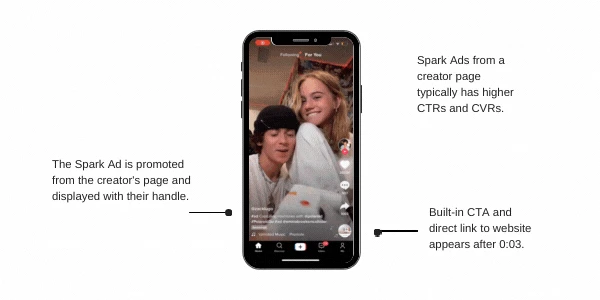
On TikTok, whitelisting typically happens through Spark Ads. The creator turns on ad authorization for a TikTok post and shares a Spark Ads code with the brand. The brand then adds that code in TikTok Ads Manager, selects the post, sets the budget and targeting, and runs the creator’s organic video as an ad.
On LinkedIn, a similar idea exists through Thought Leader Ads. A brand can request permission to promote a post from an employee, expert, customer, or creator. The post author can approve or deny the request. After approval, the brand can use that post as ad creative in LinkedIn Campaign Manager.
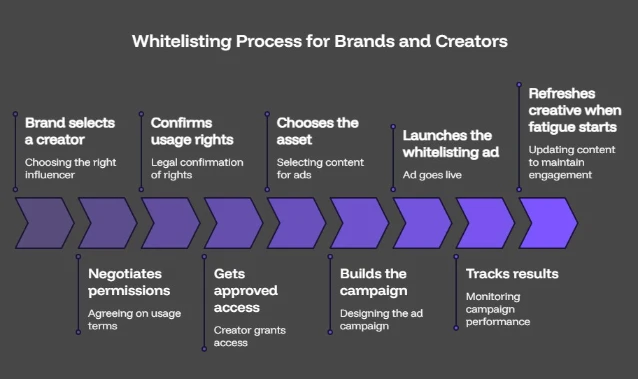
So, the simple workflow looks like this:
The brand selects a creator or thought leader
It agrees on usage rights and permissions
The creator approves access or shares an ad code
The brand chooses the post or asset
The campaign is built in the platform’s ad manager
The ad launches from the creator’s identity or content
The brand tracks results
The creative is refreshed when performance starts to drop
In short, whitelisting connects creator trust with paid social control. The creator adds the human voice, while the brand manages targeting, spend, testing, and results.
Influencer Whitelisting vs. Creator Licensing, Boosted Posts, and Brand Ads
Whitelisting usually gets mixed up with other creator and paid social tactics. That is understandable because all of them can involve the same video, the same creator, and the same product.
But the difference is in who the ad appears to have come from and who controls distribution.
Here are the main differences:
Whitelisting sits between influencer marketing and paid social. It gives brands more control than organic creator posts, but it still depends on the creator feeling believable.
If the creator feels forced, the media controls will not save the campaign. The audience always notices when the milkshake is mostly ice.
See what we did there? No? Alright, moving on...
Why Performance Brands Use Influencer Whitelisting
The benefits of influencer whitelisting are especially relevant for brands that care about measurable growth. And let's be honest, this is not just a cute creator activation. It is a way to turn creator trust into a paid media system.
For performance teams, whitelisting influencer content helps bridge the gap between native creator delivery and conversion-focused buying. That is why influencer whitelisting paid social is becoming more attractive to growth teams that want creator-led ads without giving up targeting, testing, and optimization control.
And the performance case is not just theory. According to Instagram, campaigns mixing partnership ads with business-as-usual ads drive 53% higher click-through rates, a 19% drop in CPA, and a 99% probability of outperforming BAU-only ads.
Here are the main reasons performance brands test it:
Creator Trust Meets Paid Media Control
Creators bring familiarity, social proof, and platform-native delivery. Brands bring targeting, budget control, optimization, and a clearer conversion goal.
That combination is the real advantage. And with that, you are renting a creator’s account and using creator-led trust inside a controlled acquisition system.
Better Testing Than Organic Influencer Posts
Organic influencer posts are limited by reach, timing, and the algorithm’s mood of the day. Whitelisting gives brands more room to test.
The same creator concept can be tested across different hooks, CTAs, offers, and audiences. For example, one ad can speak to first-time buyers, while another can address people who visited the site but did not convert.
More Useful Creative Shelf Life
A strong creator video should not disappear after 24 hours of polite applause.
If the agreement allows it, brands can keep testing the asset beyond the original post date. That means more learning from each creator collaboration and a better chance of finding scalable angles before the content goes stale.
Stronger Retargeting and Funnel Control
Whitelisted ads can support prospecting, retargeting, and middle-funnel trust building.
A creator-led review might bring in cold traffic. But a second version might handle objections. And a third might push hesitant shoppers toward action.
With the right setup, the brand can move people through the funnel instead of hoping one post does everything.
When Influencer Whitelisting Is Worth Testing
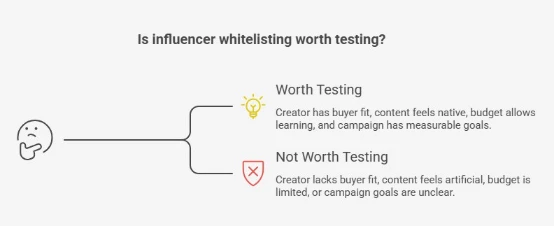
Influencer whitelisting is worth testing when the creator has a clear buyer fit, the content already feels native, the brand has enough budget to learn, and the campaign has a measurable goal.
It is not automatically worth it just because someone has a large following. A creator can be famous and still not be trusted by your actual buyer. And if the content feels too polished, too scripted, or too far away from how people naturally talk on the platform, it may perform like a brand ad wearing a creator costume.
At Creative Milkshake, we usually look at whitelisted-style creative through a performance lens. This includes audience fit, hook strength, format, message clarity, and how easily the concept can be iterated. Access is useful, but it is not the whole meal. The creative still needs to earn attention and convert.
How to Run an Influencer Whitelisting Campaign
A strong campaign starts before the ad goes live. The smartest teams treat whitelisting as a structured test rather than a last-minute media trick added after a creator post performs well.
That means the creator, brief, permissions, edits, audiences, and measurement plan all need to work together. When whitelisting influencer assets, the goal is to build a learning creative system.
Here are the key steps:
1. Choose Creators Based on Buyer Fit, Not Follower Count
The best creator is not always the biggest creator. So, we think you should start by looking at audience overlap, category credibility, comment quality, past content style, and whether the person can explain your product naturally.
For example, if you sell a sleep app for new parents, a creator with a smaller but deeply relevant community may be more useful than a lifestyle creator with a huge general audience. The same applies to finance, skincare, SaaS, fashion, wellness, food, and app brands.
Look at the target audience behind the creator rather than just the vanity numbers on the profile.
2. Audit the Creator’s Content and Brand Safety Risk
Before bringing a creator into paid media, look at more than their latest three posts.
Review tone, old partnerships, comment quality, controversial content, fake engagement, category conflicts, and whether they have the right personality for conversion-focused ads. Some creators are great entertainers but weak explainers. Others are perfect for education, demos, and trust-building.
You also need to check whether their social media accounts are clean enough for your brand’s risk level. By that, we don't mean every creator needs to be squeaky corporate. But it does mean your team should know what it is attaching paid media to.
3. Negotiate Permissions Before Production Starts
Do not wait until the content is ready to ask what the brand can do with it. That is how messy Slack threads are born.
Clarify access, usage duration, platforms, editing rights, approval steps, renewal fees, exclusivity, and whether the ad can run from the creator’s identity. If the creator is acting as a brand partner, both sides should understand what is being allowed and for how long.
You should also align on content approval before launch. A clear process prevents delays and avoids turning every caption tweak into a mini legal drama.
4. Brief for Paid Social, Not Just Organic Posting
A whitelisted ad needs a stronger structure than a casual creator post.
The brief should include the buyer's pain point, product proof, key objections, must-say claims, must-avoid claims, offer details, and CTA. It should also give the creator room to sound like themselves.
This is where many influencer marketing campaigns fall flat. They ask creators to “be authentic” but give them no useful direction. The result is a nice video with no hook, no tension, no reason to click, and no conversion path.
5. Launch With a Small Testing Structure
Start lean before scaling.
Test a limited number of creators, two to three angles, and several hook variations. Then compare how each creative performs across prospecting and retargeting. You can also test lookalike audiences if you have enough purchase or lead data to support it.
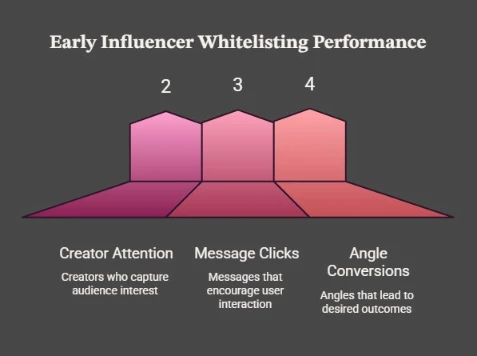
But your early goal should be learning. This means:
Which creator gets attention?
Which message earns clicks?
Which angle brings conversions?
Once the signal is clear, the ad budget/ can move toward winners.
6. Review Results and Refresh Creative Quickly
Whitelisting is not “set it and forget it.”
Watch fatigue, comments, conversion quality, and drop-offs. If CTR falls while frequency rises, the audience may be tired of the same face or hook. But if people click and do not buy, the message may be strong at the top but weak at the offer level.
So, use campaign metrics to decide what to keep, cut, remix, or reshoot. Then feed those learnings back into the next creator brief.
What to Include in An Influencer Whitelisting Contract
The contract should address every ambiguity before the ad goes live. A strong influencer whitelisting contract should spell out:
Usage rights
Ad permissions
Paid media duration
Platforms
Territories
Editing rights
Exclusivity
Creator approvals
Whitelisting fees
Reporting expectations
Cancellation terms
Disclosure requirements
Avoid vague lines like “brand can use content for ads.” That sounds fine until someone asks whether it includes Reels, Stories, paid media, edits, cutdowns, new captions, new hooks, international markets, or a 90-day extension.
Instead, specify the exact platform, duration, territory, asset type, and whether the brand can change copy, edit video, create variations, or combine footage with other assets. If you are using an influencer agreement, make sure the contract terms match the campaign plan and not just the organic deliverables.
Pricing should also be clear. Whitelisting fees creators add are typically 20-25% of content value, although fees vary by creator size, niche, platform, and length of access. Some creator whitelisting fees are $100 to $1,500+ per month on top of content rates.
Also include content permissions, disclosure expectations, and revocation rules. Because when money, access, and creator identity are involved, “we assumed” is not a strategy.
Creative Strategy: What Makes a Whitelisted Ad Work?
Most whitelisting guides focus on access and permissions. Those matter, obviously. But once the campaign is live, the creative does the heavy lifting.
A creator handle might get the first glance. The hook earns the second. The message earns the click. The proof earns the conversion.
Creative Milkshake’s role in this kind of ecosystem is not just making creator content look good. We always try to build platform-native performance creative with hooks, angles, iterations, and feedback loops that paid social teams can actually test.
Here's an example of that work with our client iwoca:
So, these are the creative elements that usually matter most.
Start With the Buyer’s Objection
Your creator should not just praise the product.
The strongest ads usually begin with the buyer’s problem, skepticism, objection, or moment of need. Think: “I thought this was just another budgeting app,” or “I didn’t believe this would work for sensitive skin.”
That small tension makes the ad feel more useful than a basic product compliment.
Match the Creator to the Message
Not every creator can carry every angle.
A finance creator, busy parent, athlete, beauty enthusiast, or founder-type personality all create different trust signals. For example, a finance product may need credibility and clarity, while a wellness product may need empathy and lived experience.
This is where audience data can help, but it should not replace human judgment. The creator still needs to feel like the right messenger.
Build Multiple Hooks From One Core Idea
One good idea can create several ads.
Try a problem, mistake, comparison, “things I wish I knew,” before/after, or testimonial hook. You can also test one concept across different openings, captions, edits, and CTAs.
This gives the media team more to work with without forcing the creator to reinvent the whole story every time.
Keep the Ad Native, But Make the CTA Clear
A whitelisted ad should still feel like creator content.
But it also needs a clear next step. That could be shop now, take the quiz, download the app, claim the offer, book a demo, or learn more. By native, we don't mean vague. We mean the ad should fit the feed while still guiding the viewer somewhere useful.
Influencer Whitelisting Examples: What Strong Campaigns Usually Have in Common
We've gathered several influencer whitelisting examples, but you should not use them as copy-paste formulas. You should use them to spot patterns instead.
Here are three examples that show how creator-led paid creative can improve performance when the setup, message, and testing structure are right.
Wise
Wise needed TikTok creative that felt native to the platform while still supporting paid acquisition goals. Creative Milkshake helped the brand build localized, platform-specific videos with stronger hooks, pacing, transitions, and creator-style execution.
The campaign reduced customer acquisition costs by 26.23%, increased US conversion rates by 43.75%, doubled EU conversion rates, and lifted CTR by 17.55%.
Anua
Anua amplified creator-generated Reels through Meta Partnership Ads to combine creator trust with paid media reach. The campaign delivered a 14.3-point lift in product awareness, a 14.7x lift in return on ad spend for view content, and an 11.4-point lift in purchase intent.
LOOKFANTASTIC
LOOKFANTASTIC turned creator Reels into paid partnership ads to promote LOOKFANTASTIC The Box. Instead of letting high-performing creator content stop at organic reach, the brand amplified it through creator handles.
The campaign delivered 11x average program ROAS, 27% higher CTR, and 9% lower CPA compared with business-as-usual ads.
How to Measure Influencer Whitelisting Performance
Measurement needs to go deeper than “the creator got clicks.” A high CTR is useful, but it does not prove profitable growth on its own. Performance brands should connect attention, engagement, conversion quality, and incremental lift.
These are the metrics you should watch:
This is where performance metrics need context. A creator may drive strong ad engagement but low purchase rates. Another may drive fewer clicks but better customer acquisition. Good campaign measurement helps you avoid scaling the wrong signal.
And if your account has enough data, lookalike and custom audiences can help you test whether creator-led trust scales beyond the first obvious buyer group.
Common Influencer Whitelisting Mistakes
Even good brands can make whitelisting weird. Usually, the problem is not the tactic itself. It is how loosely the campaign is planned. The fix is to treat the ad like a proper performance asset from day one.
Here are the common mistakes:
Choosing creators only by follower count.
Treating organic creator posts as ready-made paid ads.
Not negotiating usage rights before launch.
Giving the creator a generic brief.
Running only one hook or one angle.
Over-editing the creator until the content feels like a brand ad.
Measuring only engagement instead of CPA, CAC, ROAS, and conversion quality.
Forgetting to refresh creative before fatigue sets in.
Conclusion: Turn Creator Trust Into a Paid Social System
Influencer whitelisting works best when creator trust, paid media control, usage rights, and creative testing work together.
And your goal should not just be to borrow a creator’s face, Instagram handle, or profile identity. It is to build ads that can be tested, measured, refreshed, and scaled.
Creative Milkshake fits into that system as the creative and performance layer. We help brands turn creator-led ideas into platform-native ads with stronger hooks, clearer angles, smarter iterations, and paid social thinking behind them. Because access can open the door, but creative is what gets people to walk through it.
Contact us today to learn more!
FAQs
What are the downsides of influencer whitelisting?
The downsides of influencer whitelisting include cost, creator approvals, usage rights, access setup, brand safety risk, and creative fatigue. There is also no guarantee that using creator identity will improve results. If the creator fit is weak or the ad concept is flat, performance can still disappoint.
What are the alternatives to whitelisting?
The alternatives to whitelisting include brand-owned UGC ads, licensed creator assets, organic influencer posts, boosted posts, affiliate creator programs, and standard paid social ads using creator-style creative. Some brands also test dark posting structure depending on platform setup and campaign goals.
What Is the future of whitelisting?
The future of whitelisting will likely involve more structured creator permissions, stronger compliance expectations, better reporting, and closer collaboration between influencer, legal, creative, and paid media teams. As content trends move faster, brands will need cleaner workflows and faster testing loops.
What are the best whitelisting tools?
The best whitelisting tools depend on your workflow. Some teams need creator discovery platforms, influencer management tools, ad access systems, contract software, or analytics dashboards. For eCommerce brands and social media influencers, the right stack depends on scale, internal ownership, and marketing strategy.