Spark Ads look simple from the outside. Take an existing post, put budget behind it, and let TikTok do its thing. Easy, right?
Kind of. But that is also where a lot of brands get it wrong.
The real difference between a Spark Ad that quietly burns through the budget and one that becomes a performance lever usually lies in what happens before and after the boost. It is the post you choose, the creator behind it, the objective you set, the comments you inherit, and the way you turn the results into the next creative test.
So, in this guide, you'll see what Spark Ads are, how they work, and when they actually make sense for performance marketing. You'll also learn how to test, measure, and scale them without falling into common budget-wasting traps.
Pro tip: Need help choosing the right partner? Check out our guide to the best TikTok agencies for growing your brand.
TL;DR: What Marketers Need To Know Before Using Spark Ads
Spark Ads boost existing posts instead of creating ads from scratch.
They work best when the original post already feels native and trustworthy.
Creator-led Spark Ads can outperform brand-only ads when the creator is believable.
Regular in-feed ads are still better for fast concept testing.
Spark Ads should be measured by business outcomes rather than likes alone.
The best strategy is usually to test both formats, then scale what wins.
Spark Ads need a creative pipeline and not just a media budget for TikTok performance.
What Exactly Are TikTok Spark Ads?
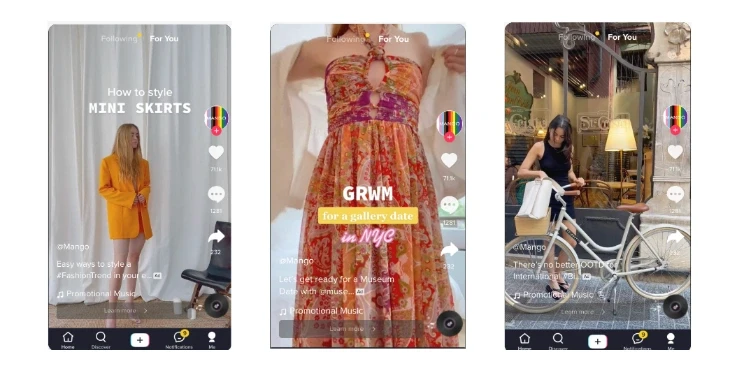
TikTok Spark Ads are a native ad format that lets brands promote existing organic posts from their own TikTok account or from a creator’s account.
Instead of uploading a fresh ad from scratch, you basically sponsor a post that already lives on TikTok. That post keeps its original look, feel, handle, and in many cases, the engagement around it.
This is why Spark Ads typically feel more like content than advertising. They can carry visible social proof (likes, comments, and shares) and the natural context of the original post.
Also, Spark Ads can use brand-owned posts or authorized creator posts. That means these ads can power influencer collaborations.
Depending on the setup, they can send viewers to a profile, a website, an app page, or a TikTok Shop/product destination. TikTok’s help center says Spark Ads can support objectives including Reach, Traffic, Video Views, Community Interaction, App Promotion, Conversions, Lead Generation, and Sales.
That flexibility is useful, but it does not remove the need for strategy. You still need a clear objective, audience, budget, and measurement plan. A Spark Ad is only as strong as the post behind it.
If you want to learn more, watch this video:
How Do TikTok Spark Ads Differ From Regular TikTok Ads?
TikTok Spark Ads differ from regular TikTok Ads, like in-feed ads, because they promote existing TikTok posts. On the other hand, regular ads are uploaded as new ad assets through the ad account.
That difference sounds small, but it changes the entire creative experience. Spark Ads inherit more of the original TikTok environment. Non-Spark ads give the brand more control, but they can also feel more obviously promotional.
Here are the main differences:
We believe that neither format is automatically better. Spark Ads usually have an edge when trust, native context, and social proof matter most. Regular ads are stronger when you need tighter messaging, faster editing, cleaner direct response, or a more controlled ad campaign.
Why Spark Ads Matter for Performance
The bigger value of Spark Ads is that they let brands scale content that already has native TikTok signals. This includes watch time, comments, saves, shares, creator trust, or proof that the concept actually resonates.
Here's how that works:
Native context can reduce ad resistance.
Existing engagement can make the ad feel less cold.
Creator handles can carry more trust than brand handles.
Strong organic comments can become part of the persuasion layer.
And when the creative matches the objective, Spark Ads can support awareness, consideration, and conversion campaigns.
The performance upside can be real. According to TikTok for Business, Spark Ads had a 134% higher completion rate than standard In-Feed Ads. They also had a 6-second view-through rate that was 157% higher than standard ads.
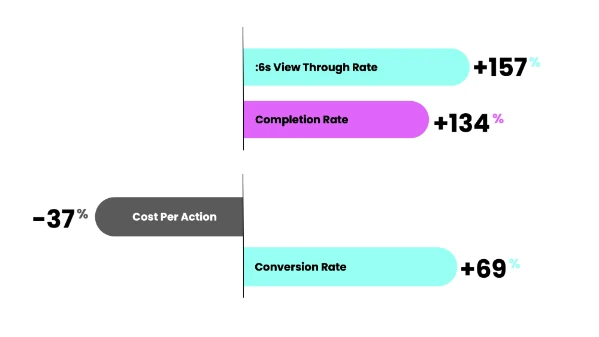
But let us be clear: That does not mean every Spark Ad wins. A weak post with paid budget is still a weak post. Spark Ads perform best when the content already has a reason to scale.
How To Use Spark Ads for TikTok Performance: A 7-Step Framework
The better approach is to treat Spark Ads as part of a creative testing loop. You should be testing what people trust, what they watch, what they click, and what they buy from.
Here are the seven steps:
1. Start With the Right Post, Not the Ad Format
Spark Ads work best when the post has a reason to be amplified. Before you put a budget behind an organic TikTok post, look for signals that the content is doing more than collecting passive views.
Check hook retention, saves, shares, positive sentiment, creator credibility, product clarity, and comments that show buying intent.
A comment like “Where can I get this?” can be more useful than a pile of low-intent likes.
Do not choose a post only because it went viral. A funny post can drive TikTok views without driving purchases. Sometimes, the better Spark candidate is a smaller post with clearer buyer intent and stronger product relevance.
2. Decide Whether To Spark a Brand Post or Creator Post
A brand-owned Spark Ad is easier to control and manage. But a creator-authorized Spark Ad can feel more native and authentic because it comes from a person the audience may trust more than a brand handle.
This is where creator content becomes especially useful. Creator Spark Ads work well for testimonials, product demos, reactions, reviews, unboxings, problem-solution videos, and TikTok Shop-style product discovery.
In fact, TikTok analyzed the top 200 high-spending Spark Ads and found that 87% involved creators.
Still, creator-led Spark Ads need more coordination. You need usage rights, approvals, creator fit, comment management, and clear expectations. Also, the creator needs to feel believable for the product, category, and customer.
3. Get Permission and Set Up the Spark Code Correctly
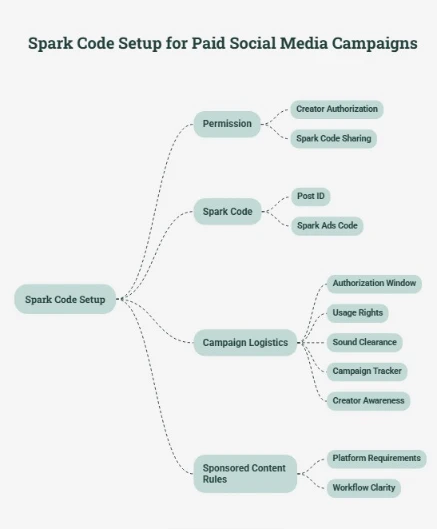
Brands need access to promote the post. For creator posts, this usually means the creator enables ad permissions and shares a Spark Code with the advertiser.
We recommend not treating this like admin work that you can rush through at the last minute. This is where messy campaign logistics can quietly create delays, so make sure to:
Confirm the authorization window before launch.
Align usage rights with your campaign timeline.
Check whether the sound is cleared for paid usage.
Save the post ID and ad code in your campaign tracker.
Make sure the creator knows that comments, profile visits, and brand visibility may increase once the post is promoted.
This is also where sponsored content rules and platform requirements need to be clear. If the workflow is sloppy, the ad may be delayed before it even gets a fair test.
4. Match the Campaign Objective to the Role of the Post
The same Spark Ad can perform very differently depending on the objective.
For example, a funny creator post might be great for views or community interaction, but weak for sales if the offer is unclear. A product demo may be better for conversions if it shows the product early and explains the value quickly.
Use TikTok Ads Manager to match the post to the job. Reach, or video views, can support awareness. Community interaction can help build profile momentum and social proof. And traffic, app promotion, lead generation, conversions, or sales can support lower-funnel goals.
This is where brand logic matters. The creative should connect to what the business actually needs from the campaign.
5. Keep the Native Signals That Made the Post Work
Spark Ads can fail when brands try to over-control them after the fact. The value usually lies in the original creator's delivery, pacing, captions, comments, and natural feel. But the goal is not to sand down every rough edge until the post looks like a polished brand ad.
Before launch, you should review the post like a strategist. Answer these questions:
Does the hook still work when seen cold?
Does the sound support the message?
Does the caption add useful context?
Are the comments positive or persuasive?
Does the product appear clearly enough for paid traffic?
A strong native style does not mean messy. It means the content feels like it belongs in the feed while still doing a clear performance job.
6. Test Spark Ads Against In-Feed Ads Fairly
Spark Ads should not be compared against completely unrelated in-feed ads. If one ad uses a creator testimonial and the other uses a polished product montage, you are not testing the format. Instead, you are testing two completely different creative ideas.
A fair test isolates as many variables as possible. Use the same audience, objective, product or offer, opening hook, ad spend, and measurement window.
That gives you a cleaner read on whether the Spark format is improving performance or whether the result is coming from the creator, offer, landing page, or concept.
The point is to understand which format works best for which creative job.
7. Turn Winning Spark Ads Into the Next Creative Brief
The best Spark Ads should feed your next round of creative rather than just receive more budget. If a Spark Ad works, analyze why:
Was it the creator?
The opening line?
The product proof?
The comment section?
The pacing?
The format?
The emotional angle?
This is how we think about TikTok creative at Creative Milkshake. It is not a one-off asset game, but a structured creative testing, where every result becomes fuel for the next brief.
Body&Fit is a strong example. The sports nutrition brand struggled to keep up with TikTok’s demand for fresh content, so Creative Milkshake built a system around strategy, localization, talent sourcing, production, and adaptable videos. By changing hooks, callouts, and voiceovers, 46% of Body&Fit’s TikTok spend went to CM-produced videos.
When Are Spark Ads Not the Best Choice?
Spark Ads are not the best choice when the content is weak, the message is unclear, or the brand needs more control than the format allows.
This is where the hype can get expensive. Spark Ads can amplify trust, but they can also amplify confusion. If the post is not doing its job before paid media, the budget will not magically fix it.
These are the cases where you may want to pause:
If the brand has no strong organic or creator content yet, start by testing new concepts.
If the campaign needs strict compliance or legal approvals, Spark Ads may require more control and review.
If the offer, CTA, or landing page is still changing, regular ads may be easier to iterate.
If the creator’s comment section is negative, confusing, or off-topic, the social proof can work against the brand.
If the post uses audio that is not cleared for paid usage, it may create friction.
If the brand needs fast creative changes, Spark Ads may be slower because of authorization and creator coordination.
If the original post does not clearly show the product or value, Spark Ads may drive views without conversions.
This is also important for categories in which sponsored messaging requires careful review. Spark Ads are strongest when the content already has a clear reason to be amplified.
Spark Ads vs. In-Feed Ads: Which Should You Test First?
You should test regular in-feed ads first when you need controlled learning. And Spark Ads first when you already have proven creator or brand content with strong trust signals.
The better question is not “which format is better?” It is “which format matches the job?” For a new offer, you may need speed and control. For a creator review with strong comments, you may need amplification.
Here are the decision rules:
From our experience, we've seen that the strongest TikTok accounts usually do not pick one forever. They use both. In-feed ads discover controlled learnings, but Spark Ads scale content with native proof.
That is also how you reduce creative fatigue over time. You keep testing new angles while scaling the ideas that already show traction.
Common Spark Ads Mistakes That Hurt Performance
Spark Ads can look easy to launch, which is exactly why teams sometimes skip the discipline. The format is simple, but the performance system behind it is not.
Before you put serious budget behind Spark Ads, avoid these mistakes:
Boosting a post just because it has likes, without checking if it has buyer intent.
Choosing creators based on follower count instead of audience fit.
Ignoring negative or confusing comments before turning a post into an ad.
Testing Spark Ads against unrelated regular ads and calling it a format test.
Using posts where the product appears too late, or the value proposition is unclear.
Forgetting usage rights, authorization windows, or commercial sound restrictions.
Treating Spark Ads like a one-time boost instead of part of a creative testing system.
Scaling the same winning post too long without creating new variations.
Measuring only engagement instead of cost, conversion quality, and revenue.
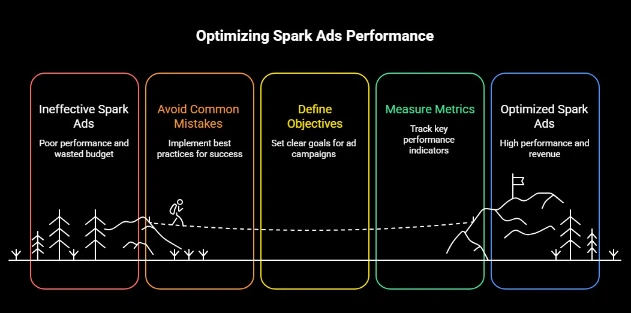
Good Spark Ads best practices are not complicated, but they do require consistency. You need to choose the right post, set the right objective, and measure the right metrics. Then use the results to improve the next round of video creative.
This is how you avoid ad fatigue without constantly starting from zero.
How Creative Milkshake Helps Brands Build Spark-Worthy TikTok Creative
Creative Milkshake’s TikTok Ads creative expertise applies the same performance-centric system we’ve discussed in this post to Spark Ads. We rely on the assets we've already built. That includes platform-native creative, creator-led execution, hook testing, localization, paid media feedback, and creative iteration.
We believe that Spark Ads are not just a media-buying tactic. They need a steady pipeline of content worth amplifying. That includes creator ads that feel native, video ads that still convert, and ad creation systems that can keep producing new learnings.
Our TikTok work with Wise is proof of that approach working.
We helped revitalize their paid acquisition efforts with a TikTok-first creative strategy, localized production, platform-native execution, and an ongoing feedback loop. The campaign reduced customer acquisition costs by 26.23%, increased US conversion rates by 43.75%, and lifted click-through rates by 17.35%.
Conclusion: Turn Spark Ads Into a System, Not a One-Off Boost
Spark Ads work best when they amplify content that already has a reason to scale. The format can help with trust, social proof, and native engagement, but format alone does not create performance.
The winning approach combines creator fit, strong hooks, product proof, fair testing, and creative iteration. So, brands should not treat Spark Ads and regular TikTok ads as opposites.
You can use standard ads to quickly test new angles. But use Spark Ads to scale the content that already shows native traction.
If your TikTok strategy needs more than another boosted post, we can help you build the creative and advertising system behind your next scalable campaign.
Contact us today and let’s talk TikTok Spark Ads!
FAQ
Are there any specific best practices when using TikTok Spark Ads?
Yes, the best practices are to choose posts with strong native signals, check comment quality, align the post with the campaign objective, secure usage rights and authorization, and fairly test Spark Ads against regular ads. Do not boost content just because it has likes. Look for intent.
How can a brand start utilizing TikTok Spark Ads?
You can start by identifying a strong brand or creator post, getting authorization if needed, choosing the right campaign objective, setting up the ad, and measuring it against clear KPIs. We recommend starting small, properly comparing performance, and scaling only when the post proves it can support the business goal.
What are the benefits of using TikTok Spark Ads for brand promotion?
The main benefits of Spark Ads are native feel, visible social proof, creator trust, stronger engagement potential, profile growth, and the ability to turn organic content into paid distribution. They can make a brand feel more plugged into TikTok culture when the creative is chosen well.
Are TikTok Spark Ads better than in-feed ads?
TikTok Spark Ads can be better than in-feed ads for trust, creator proof, and native engagement. But in-feed ads can be better for fast testing, creative control, and direct-response structure. Most brands use both instead of treating one format as the permanent winner.