

When running social media ads, you’re not only competing against other brands. You’re up against infinite scroll, short attention spans, and algorithms designed to keep people distracted.
On platforms like Meta and TikTok, video rules, of course. Still, ad copy is what pushes someone to take action. It is what turns a view into a click, and a click into a conversion.
The data makes this clear. The average e-commerce conversion rate is still under 2% globally. This means most visitors leave without doing anything. At the same time, TikTok continues to lead in engagement, with rates reaching up to 3.7%.
So attention is there. The gap is in how you use it.
If your hook, message, and call to action do not connect instantly, even a strong creative will struggle to convert.
At Creative Milkshake, we see this play out across Meta and TikTok campaigns every day. The ads that perform best communicate value fast, feel native to the platform, and speak directly to what the audience cares about.
In this guide, we’ll break down exactly how to write high-performing ad copy for platforms like Facebook Ads, Instagram, and TikTok. We’ll also share our in-house techniques, real campaign structures, and practical frameworks.
Read Next: Discover the Best TikTok Agencies for Performance Marketing in 2026
Why Good Ad Copy Can Make a Difference
When you’re running a paid ad campaign, every impression costs money. Whether you’re scaling Facebook Ads, testing creatives on TikTok, or experimenting with LinkedIn Ads, your profitability ultimately comes down to one thing: how efficiently your message turns attention into action.
And that’s exactly where strong ad copywriting creates leverage.
In the case of Meta and TikTok, you might assume your visual creative for the ad is important for performance (and you’re not wrong). But your ad’s copy is what elevates it, and perhaps plays the pivotal role in guiding action, which is what you ultimately want.
As experts in creative storytelling, we’ve seen firsthand how brands sometimes struggle with ad copy, which kills the performance of what could have been a killer ad.
Let’s see why ad copy matters, particularly on Meta and TikTok:
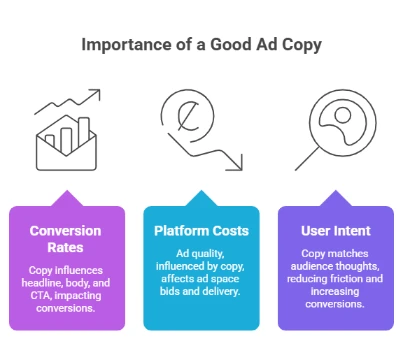
1. Directly Impacts Conversion Rates
Your copy influences every stage of the marketing funnel. The headline determines whether someone stops scrolling. The body copy builds trust and relevance with your target audience. And the call to action (CTA) drives the final decision. If even one of these breaks, your conversion rates drop.
2. Affects Platform Costs and Delivery
Modern ad platforms also evaluate your message and overall ad quality when determining your ad space bids. The copy, of course, plays an important part here.
On Meta, metrics like engagement and relevance influence ad quality. Even though TikTok doesn’t publicly label them the same way, the algorithm heavily prioritizes ads with higher engagement. And that’s directly influenced by how compelling your hook and narrative are.
It’s the same with Google Ads, by the way, where a literal ‘Quality Score’ is used to determine cost per click (CPC).
3. Aligns With User Intent and Reduces Friction
Remember, ad copy has a clear job. It needs to match what your audience is thinking and looking for in that moment.
Most advertisers focus heavily on targeting. The real difference comes from message-market fit.
People convert when your message reflects their problem and shows a clear path to the outcome they want.
This is even more important in retargeting ads, where users are already familiar with your brand. If your messaging doesn’t evolve, you lose momentum.
The Anatomy of a High-Converting Ad Copy
So what does good ad copy look like on social platforms like Facebook, Instagram, and TikTok? After analyzing both high and low-performing ads and A/B testing tens of variations on copy in Meta and TikTok ads, we’ve discovered the following:
The 3 Core Elements
Every high-performing ad, whether it’s short-form TikTok videos or feed-based Meta ads, relies on three essential components:
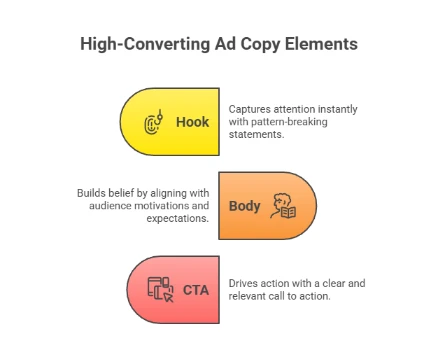
1. Hook (Stop the scroll)
This is your first impression, and it carries the most weight. Your headline copy or opening line in the video needs to capture attention online instantly. This is where most ad copywriters fail. They lead with generic statements instead of pattern-breaking hooks.
Strong hooks typically:
Call out a specific target audience
Highlight a clear pain point
Use curiosity or contrast to interrupt scrolling behavior
2. Body (Build desire + relevance)
Once you’ve stopped the scroll, your job is to build belief.
This is where your ad copy must align with your audience’s motivations, objections, and expectations. Whether you’re using storytelling, bullet points, or direct-response formatting, the goal stays the same: make the message feel personally relevant.
3. CTA (Drive action)
Your call to action is where conversions are won or lost. A vague or mismatched CTA can undo everything your ad has built up. For instance, HubSpot found personalized CTAs perform 202% better than generic ones.
Whether it’s “Learn More,” “Shop Now,” or “Buy Now,” your CTA must align with the user’s level of awareness, the complexity of the offer, and the stage of the marketing funnel.
The First 3 Seconds Rule
Your ads just have a few seconds to make a strong impression. Most experts put this window around three seconds. This means the likelihood of clicking and engaging with an ad is primarily determined in the first three seconds.
This reality only emphasizes the importance of the hook. Your headline, opening line, and visual need to work together immediately.
This matters even more in short-form videos where retention drives delivery. It also appleis to native advertising formats that blend into feeds, and mobile-first experiences where distractions are constant.
In our daily practice, we’ve seen ads with strong early engagement get better reach and lower cost per action (CPA).
Emotional vs. Logical Triggers
High-performing ad copy usually combines emotional and logical triggers to move the consumer toward conversion.
If your messaging only appeals to logic, it feels flat. If it’s purely emotional, it can feel untrustworthy. The best social media ads balance both together in a way that feels natural.
Emotional triggers usually come from two angles: pain points (what your target audience is struggling with) or aspirations (what they want to achieve or become).
For example:
Pain-driven: “Still losing money on underperforming ads?”
Aspiration-driven: “Scale your brand to 7 figures with better creative strategy.”
Then, there’s urgency, curiosity, and FOMO (fear of missing out). To push action, you layer in psychological triggers:
Urgency → “Limited time offer ends tonight.”
Curiosity → “This one tweak changed everything.”
FOMO → “Don’t miss out on this rare deal.”
Now, where does logic come in?
Once emotion grabs attention, logic justifies the decision. This includes specific results, benefits, and even proof elements like testimonials. Those can form part of the body of ad copy.
Pro tip: It’s best to have multiple creatives with different ad copy to prevent creative fatigue, especially on Meta.
Proven Ad Copy Frameworks for Meta & TikTok (With Examples)
If you want consistent results from your ad copy, you need frameworks. The most effective social media ads aren’t written from scratch every time. In fact, they follow proven structures that align with how people think, scroll, and buy.
Frameworks also make testing easier. You can create multiple variations, test different angles, and scale what performs without guessing what to try next.
Below are four high-performing frameworks that top ad copywriters and we, of course, use across Meta and TikTok.
1. Problem → Agitate → Solution (PAS)
This is one of the most reliable copywriting techniques for direct response. Here’s how it goes:
Problem → Call out a specific pain
Agitate → Amplify the frustration or consequence
Solution → Introduce your product/service as the fix
For example, Atlassian’s Facebook ad highlights the problem of siloed Dev and IT teams right in the creative, and offers a clear solution in the hook.

This format works extremely well in Facebook Ads, display ads, and even responsive search ads, where clarity and intent matter.
PAS is most effective when your audiences already know they have a problem. It also requires close targeting so your ad reaches people with that specific issue.
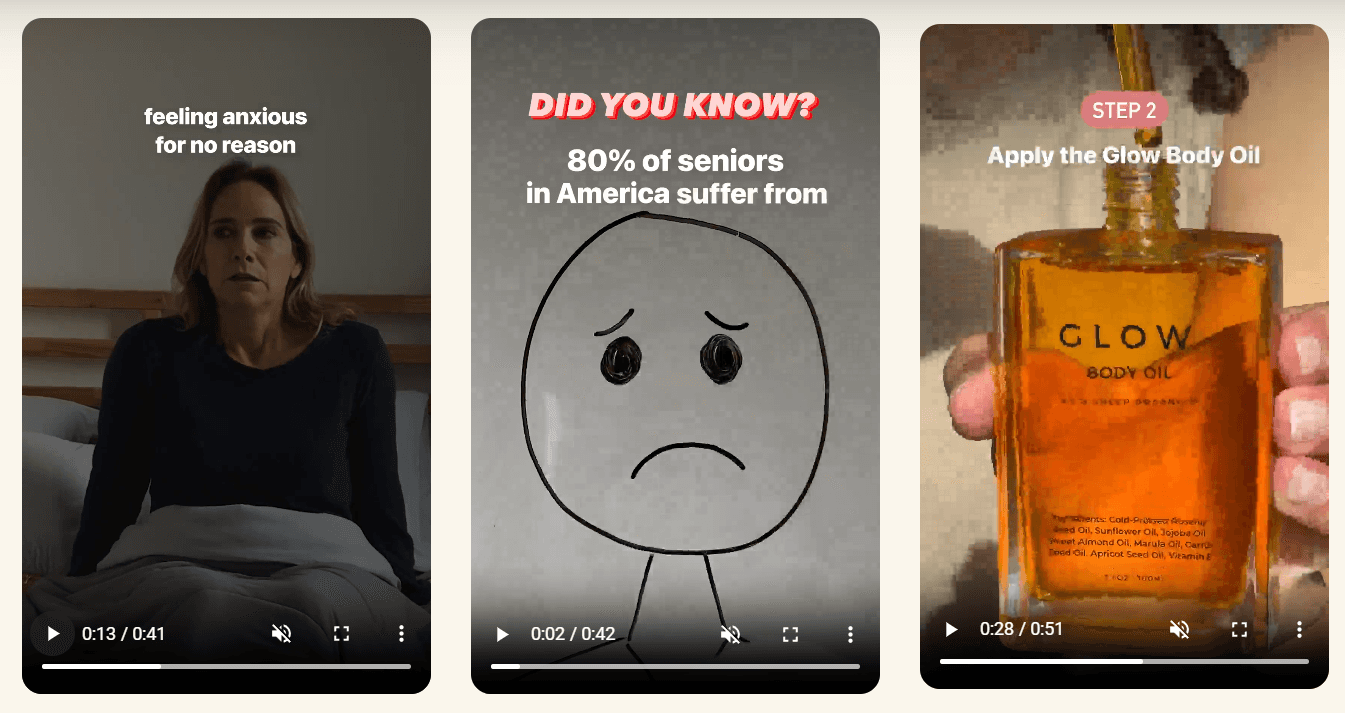
2. Hook → Story → Offer
This framework is ideal for TikTok and short-form videos, where storytelling drives engagement. You grab attention with a clever, hold it with a compelling story, and turn it into results with an offer.
Structure:
Hook → Grab attention immediately
Story → Build relatability and trust
Offer → Present the product or CTA
TikTok’s algorithm favors content that feels native, like narrating a story, which is why this structure works so well.
For this particular framework, creator-led ads work the best. It’s better if the story comes from an actual person than the brand itself. That’s because of relatability and trust. They trust user-generated content (UGC) more than branded ads.
At Creative Milkshake, we have tested this framework across multiple campaigns and have seen it work every time.
For 8Sheep Organics, we used a compelling stat about insomnia among American seniors to grab attention, followed by a creator sharing her experience, and then introduced the product with clear benefits. This led to a lower cost per acquisition.
3. Benefit-Driven Bullet Format
On Meta platforms, particularly Facebook, users easily skim. That’s why this format works. It’s clear, fast, and easy to digest.
Structure:
Strong ad headline
Bullet-style benefits
Clear call-to-action
Here’s an example of this style of ad copy in a Facebook video ad for Our Place:
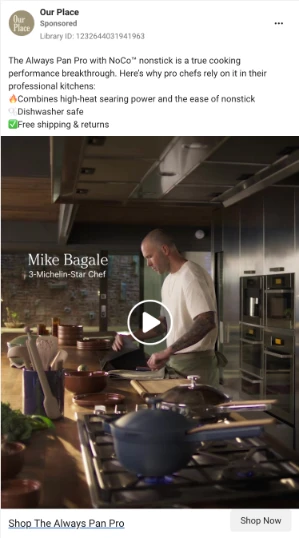
This format aligns well with feed-based browsing behavior, mobile-first consumption, and short attention spans. It also pairs well with strong visual assets and structured ad title variations.
We use this format when testing multiple ad combinations inside a single ad group, especially when optimizing for clarity and speed.
4. Social Proof + Offer Stack
Trust is a major driver of conversion, particularly for cold traffic. That’s why 99% people look for reviews when shopping.
But what if you could combine both of those? For this, you can use UGC testimonials to build trust.
For this framework to work, it’s best to combine it with a compelling offer to reduce hesitation and move users toward action.
Social proof: Use testimonials, reviews, or user-generated content
Offer: Add a clear incentive such as a discount, free trial, or free shipping
This can be good for both Meta and TikTok ads. It also works well in retargeting ads, where building trust can prompt users to take action on your landing page or complete a lead-gen form. In other words, it’s as good for B2B as B2C.
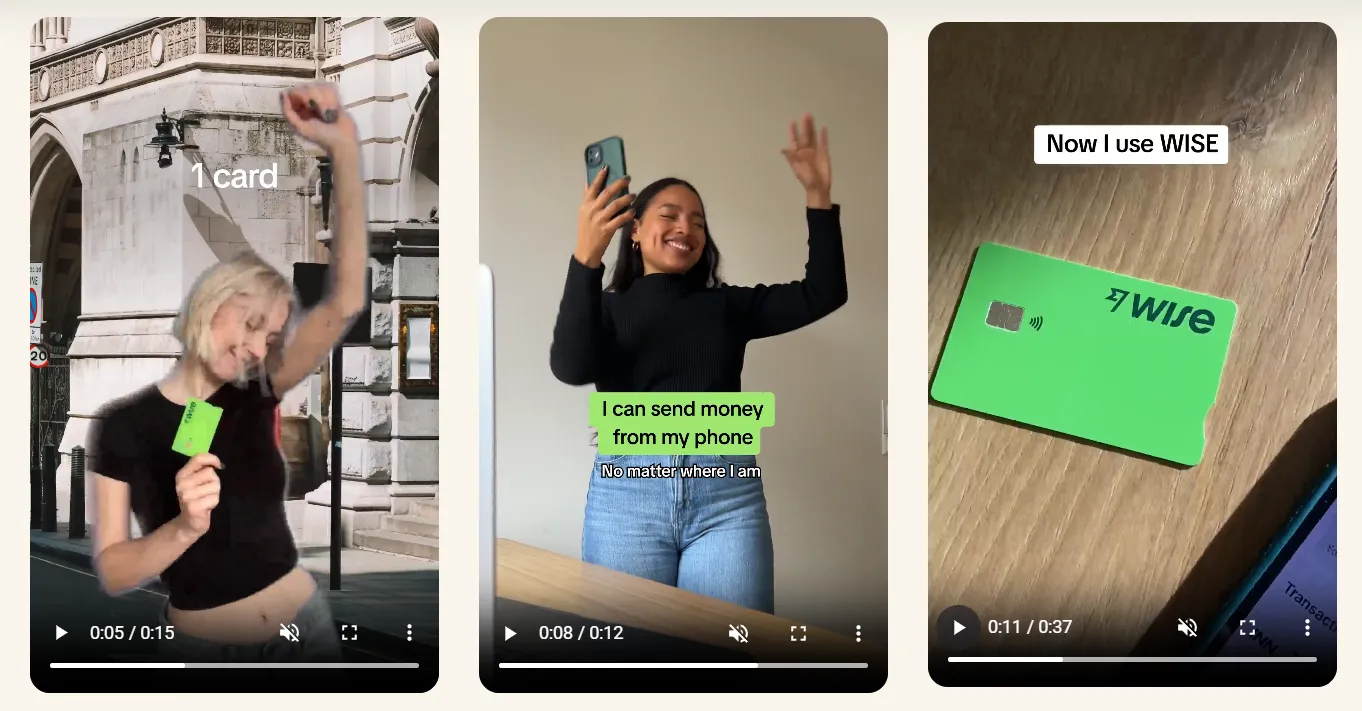
We have used this framework for Wise, where user reviews were turned into video content. Subtitles carried the key messages, allowing viewers to read the proof while watching. This helped strengthen trust and improve engagement.
How to Write Hooks That Stop the Scroll
Remember: if your ad copy fails in the first line, nothing else matters. As we mentioned, on platforms like Facebook, Instagram, and TikTok, users decide in seconds whether to engage. This means your headline, opening line, or first spoken words in videos must earn attention instantly.
“On average, five times as many people read the headline as read the body copy. When you have written your headline, you have spent eighty cents out of your dollar,” wrote David Ogilvy, author of ‘The Father of Advertising.’
High-Performing Hook Types
Regardless of the format, there are some tried-and-tested formulae for great hooks. Let’s look at them.
Question Hooks
These trigger self-reflection in your target audience.
Examples:
“Why are your ads getting clicks but no conversions?”
“Are you making this mistake in your skincare routine?”
They work well for mid-funnel retargeting, where users are already somewhat aware.
Pattern Interrupts
These break expectations and disrupt scrolling behavior.
Examples:
“Stop trying different diets. Do this instead.”
“This isn’t another marketing tip.”
Pattern interrupts work best in crowded feeds where users are saturated with similar social media ads. Remember, users get so many ads besides the organic content. You have to break the pattern with something enticing.
“Calling Out” Specific Audiences
The more specific you are, the more relevant your ad feels. This improves message-market fit and may even increase engagement levels when paired with precise targeting.
Examples:
“New moms struggling with sleep? You don’t want to miss this.”
“B2B marketers using LinkedIn Ads–this is for you.”
Contrarian Statements
These challenge common beliefs and spark curiosity. But it has to be backed by clear data or proof.
Examples:
“More traffic won’t fix your conversions.”
“Your multi-step skincare routine is the problem.”
Curiosity Gaps
These create an open loop that the user wants to close. Curiosity-driven hooks are particularly great for TikTok ads.
Examples:
“We tested 50 ads. Only 3 worked. Here’s why.”
“This one tweak changed my entire mindset about fitness.”
Insider tip: Create 5-10 hook variations per campaign using different angles. Test them using structured AI-powered A/B testing tools. Analyze performance through ad reporting dashboards.
How to Write Calls-to-Action That Convert
Your CTA is where your ad copy turns attention into results.
You can have a strong headline, compelling message, and engaging visuals, but if your CTA is weak, unclear, or misaligned, your conversion rates will suffer.
In fact, a small CTA change may just be the fastest way to improve performance across any ad campaign.
Types of CTAs
Different CTAs work at different stages of the marketing funnel. Matching intent is critical.
Direct (Shop Now, Buy Today)
These are action-focused and best for high-intent users. These perform well with bottom-of-funnel audiences who already know your brand or, better yet, trust it.
Examples:
“Buy Now”
“Start Your Free Trial”

Soft (Learn More, Discover Why)
These CTAs reduce friction and are ideal for colder traffic. You can use these in top-of-funnel social media ads when introducing a new product or concept to your target audience.
Examples:
“Learn More”
“See How It Works”
Urgency-Based (Limited Time)
These use FOMO to speed up decisions. Urgency-based CTAs are highly effective in seasonal campaigns and promotional ad campaigns, especially when paired with strong landing page copy. The latter is important because urgency will get them to click, but the landing page will guide them toward conversion.
Examples:
“Limited Time Offer”
“Ends Tonight”
CTA Placement Strategy
Where you place your CTA matters just as much as what it says.
Early CTA: Works well for high-intent users who don’t need much persuasion.
Late CTA: Better for storytelling formats where you build context first.
On TikTok, you have multiple placement options (depending on the ad format), such as in-feed, comment panel, or end page. In TikTok-style videos, we typically repeat the CTA both early and late to capture different viewer behaviors.
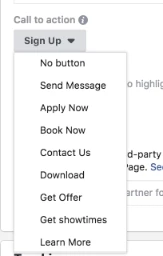
On Meta (Facebook), the CTA button depends on your campaign goal. You don’t have to worry about the placement as much.
How to Use Multiple CTAs in One Ad?
Some ads include more than one call to action, but they’re layered strategically. For example, a soft CTA like “Learn more” can be placed early, while a strong CTA like “Buy Now” can be placed at the end.
This works particularly well in longer-form creatives and lead forms, where users may need multiple touchpoints before converting.
Platform-Specific Copywriting Strategies for Meta and TikTok
Writing high-converting ad copy also depends on the platform you’re using. Although there are many similarities in Meta (especially Instagram) and TikTok ads, there are differences, too. You have to take into account the behavior patterns, content expectations, and algorithmic preferences.
How Meta and TikTok Differ (and How Your Ad Copy Should Embrace That)
Meta platforms are intent-and-scroll hybrids. Users browse, click, read, and evaluate before taking action.
TikTok, on the other hand, is built around fast, entertainment-driven content where users consume quickly and react in the moment.
This difference shapes how your ad copy should be written.
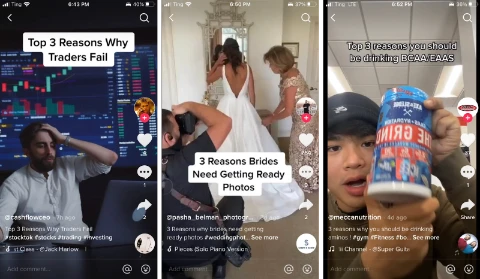
Also, TikTok is more informal and trend-based than Facebook. This means your ad copy can be casual, feature emojis, and keep it light.
Meta’s Instagram also has a similar vibe as it’s a video-first platform. Facebook, on the other hand, is more diverse in terms of content and audience. The language, format, and message depend on your niche and audience.
Facebook Ad Copy Best Practices
This is what we recommend for ad copy for Facebook ads in particular:
Primary text vs headline optimization: On Meta, both the primary text and ad headline matter, but they serve different roles. Primary text builds context, story, and value, while the headline reinforces the main benefit or CTA. Strong headline copy focuses on outcomes, and the body supports it with benefits, proof, and clarity.
Use of emojis, spacing, and formatting: Well-structured copy improves readability and performance. Use emojis to guide scanning (but don’t overuse). Break text into short lines for mobile.
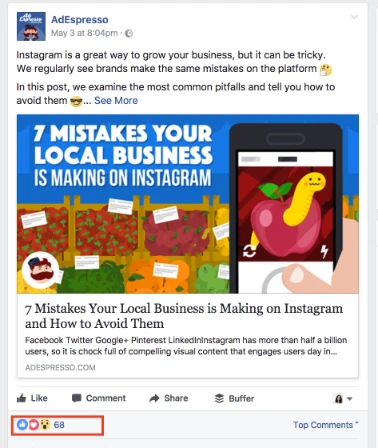
Leveraging comments and engagement bait: Comments matter for engagement and, by extension, performance. Encourage interaction with statements like “Comment ‘GUIDE,’ and we’ll send it to you.” Asking simple questions.
TikTok Ad Copy Best Practices
With TikTok’s video-first, trend-centric approach, here’s what works best:
Writing for voiceovers and captions: On TikTok, your copy lives in spoken words (voiceover) and on-screen captions. This means your ad copywriting must sound natural and not like traditional ads.
Aligning with trends and sounds: TikTok rewards relevance. Use trending formats and story ideas. Match pacing and tone of viral content. Most importantly, add sounds like viral songs or even some background music.
Native language and authenticity: TikTok doesn’t need super polished language. Use a casual, conversational tone and avoid overly “salesy” language.
How to Adapt One Message Across Both Platforms
You can use the same angle but different execution for Meta and TikTok, because they are unique platforms.
For Example:
Meta → Structured benefits + clear call-to-action
TikTok → Story-driven, informal delivery
Both communicate the same value, but in platform-native ways.
This doesn’t necessarily mean you need completely different creatives for each. You can repurpose winning creatives from one platform for the other.
Identify top-performing ads via ad reporting. Create new ad variations for each platform. Adjust tone, format, and structure.
We usually test multiple versions inside one ad group, using automation to see which creative and copy do well.
Keep in mind that platform context shapes performance. The better your ad copy matches the behavior and expectations of each platform, the higher your efficiency, scalability, and overall results.
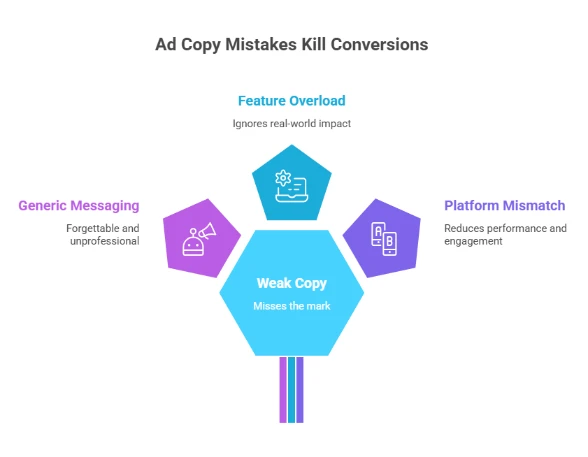
Common Mistakes in Social Ads Copy That Kill Conversions
Even well-funded ad campaigns fail when the ad copy misses the mark. Across accounts we’ve analyzed, the same patterns show up again and again.
The following are the most common mistakes to avoid:
1. Writing Like a Brand Instead of a Person
Most brands try to sound “professional.” That results in generic, forgettable messaging. Your consumer doesn’t want corporate language. They want clarity and relatability.
Weak:
“We provide innovative marketing solutions for modern businesses.”
Stronger:
“Struggling to get consistent results from your ads?”
On platforms like Instagram and TikTok, conversational tone drives higher engagement levels and better performance in social media ads.
2. Overloading With Features Instead of Benefits
Listing features is good, but not enough. Instead, outcomes move the needle.
Weak:
“Includes advanced targeting and analytics dashboard.”
Stronger:
“See exactly what’s working and cut wasted ad spend.”
Your target audience cares about results. Align your headline copy and body with real-world impact.
3. Ignoring Platform-Native Style
As we said, copy that works on Meta might not always perform the same way on TikTok, and vice versa.
Common mistakes include using overly polished messaging in TikTok videos, writing long, unstructured text for Meta feeds, and ignoring how users consume content on each platform.
This mismatch reduces performance, even if your offer is strong.
Scale Meta and TikTok Performance with Creative Milkshake
High-performing ad copy comes down to a few essentials. Strong hooks capture attention, clear messaging builds relevance, and the right CTA drives action.
At Creative Milkshake, our team builds ad copy around platform behavior, audience expectations, and what actually drives conversions. This includes everything from the hook and narrative in the creative to the supporting copy that moves users to act.
We focus heavily on influencer-led and UGC-style ads because they consistently perform across Meta and TikTok.
If you want to improve conversion rates, reduce wasted ad spend, and scale your campaigns with more consistent performance, let’s talk about how to apply this to your brand.
FAQs
How to write killer ad copy?
To write effective ad copy, focus on clarity, structure, and relevance to your target audience. Start with a strong headline that highlights a clear benefit or pain point, then use proven copywriting techniques like PAS or storytelling to build interest. Support your message with proof such as testimonials or data, and end with a compelling call to action.
How to write a 30-second ad?
A 30-second ad should follow a tight structure that maximizes attention online and drives conversion. Use the first 3 seconds for a strong hook, the next 15-20 seconds to deliver value through clear messaging or storytelling, and the final seconds for a direct call-to-action like “Buy Now.
How long should ad copy be on Meta vs TikTok?
On Meta platforms, slightly longer copy can work if it’s well-structured, has a clear headline, and is skimmable. On TikTok, shorter and more conversational messaging performs better (even better if delivered through voiceovers and captions). Ultimately, clarity and relevance matter more than length when optimizing for conversion rates.
Should I use emojis in ads?
Yes, you can use emojis in social media ads to improve readability and increase engagement levels. They help break up text, highlight key points, and make your ad copy feel more native to platforms like Instagram and TikTok. However, overusing them can make your message look unprofessional or spammy.
Does Creative Milkshake test ad copy?
Yes, our team at Creative Milkshake relies heavily on testing to improve ad copywriting performance. This includes creating multiple ad variations, running continuous A/B Testing, and analyzing results through detailed reporting. We use data from tools and platform dashboards to refine messaging, improve conversion rates, and scale winning campaigns.
How many hooks should I test at once?
Ideally, you should test at least 3-5 hooks per ad group, and scale up to more variations using structured A/B Testing or multivariate testing. Testing multiple hooks is essential for improving performance in any ad campaign. This allows you to identify which messaging resonates best with different audiences and optimize accordingly.
Can the same ad copy work on both Facebook and TikTok?
Yes, while the core message of your ad copy can remain the same, execution must differ across platforms. Facebook typically performs better with structured, benefit-driven messaging, while Instagram and TikTok favor informal, story-driven, and native-feeling content.