TikTok ads are no longer about making something viral and hoping the algorithm carries it.
For performance marketers, DTC brands, ecommerce teams, and paid social managers, the real opportunity is building a repeatable system. This means stronger creative testing, sharper audience insight, creator-led content, paid distribution, and measurement that tells you what is actually driving sales.
That’s what an effective TikTok ad strategy requires in 2026.
If you’re not already investing in TikTok ads, it’s high time you did. TikTok data shows 66% of users say TikTok ads made them interested in a product or brand, while 33% purchased a product because they saw it on TikTok.
And TikTok Shop has made the platform even more important for e-commerce and DTC brands. During the 2025 Black Friday-Cyber Monday period, TikTok Shop reportedly crossed $500 million in U.S. sales. Major brands like Samsung US, Ralph Lauren, and Disney Store participated.
Still, winning on TikTok takes more than launching ads and waiting for results.
At Creative Milkshake, we connect research, creator-led production, paid media, AI-assisted workflows, and performance analysis so brands can scale TikTok ads with more structure.
In this guide, we’ll break down what makes TikTok different, which ad strategies are working in 2026, and how to build a system that turns TikTok creative into profitable growth.
How TikTok Ads Are a Little Different (And Why You Should Buy Them)
TikTok works differently from platforms like Facebook, Instagram, X, and Snapchat. That difference shapes how your ads need to look, feel, and perform.
On Facebook and Instagram, advertising works by matching audience to a polished offer: interests, lookalikes, retargeting pools, product catalogs, and conversion signals. That’s great for targeted advertising. And TikTok can use those signals too, but the platform is driven more by discovery, entertainment, and content relevance.
In practice, this means your ad creative matters more than your media-buying setup. A strong TikTok ad can reach beyond your existing followers or obvious buyer segments because the TikTok algorithm is built around what users engage with.
TikTok also shortens the path from attention to action in a way that Meta platforms do not always replicate. A user can discover a creator demo, watch comments for social proof, click through a call to action, browse TikTok Shop, and purchase without the experience feeling like a traditional ad funnel.
TikTok’s own business site highlights ecommerce case studies where brands used TikTok Shop, Shop Ads, Smart+ Catalog Ads, and creator-led campaigns to improve performance. For example, Ray-Ban reported a 50% decrease in cost per acquisition and a 47% increase in conversion rate.
The second big difference is creative style. TikTok rewards ads that feel native to the feed. Your ads do not need to look overly polished. They need to feel like content your audience would willingly watch.
Pro tip: You can use TikTok’s Creative Center to study top-performing ads, viral videos, trending hashtags, songs, creators, and videos by region and vertical. It can help you spot platform-native patterns before you build your next campaign.
Types of TikTok Ads
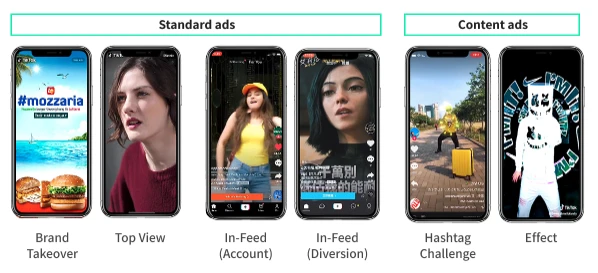
TikTok gives you a wide menu of ad formats, including in-feed ads, top view ads, spark ads, branded hashtag challenges, shopping ads, playable ads, and even some premium formats.
The right format depends on your campaign goal, budget, creative capacity, and where the customer is in the buying journey.
Let’s break down what each format is best for.
1. In-Feed Ads
In-Feed ads are the core performance format on TikTok. They appear inside the ‘For You’ feed and look similar to regular TikTok content, which makes them the closest equivalent to a native paid post.
These ads can support traffic, conversions, app installs, lead generation, and e-commerce actions, depending on your campaign objectives inside TikTok Ads Manager.
They’re usually the best starting point for paid TikTok. More importantly, they’re good if you’re just starting out with ads on the platform. You have greater flexibility, as you can test different hooks, voiceovers, text overlays, CTA, landing pages, offers, and creator styles without committing to a high-cost premium placement.
The downside is that In-Feed Ads compete directly with every other video in the feed. If the first 2 seconds feel like an ad, the user can scroll past before they understand your product.
We usually use in-feed as the format to learn what your audience responds to before investing in larger placements.
Best for: Creative testing, conversions, traffic, app installs, lead generation, and scalable paid ads.
2. TopView Ads
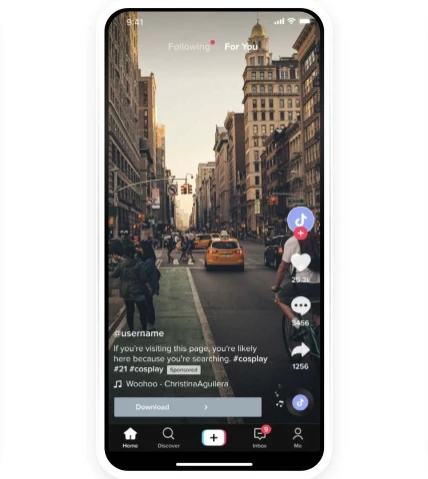
TopView ads are premium placements for high-impact awareness. They appear when a user opens TikTok or near the top of the feed experience. This makes TopView useful when you need a broad reach quickly.
We would not usually start with TopView if your main goal is immediate cost per acquisition. It can work well when the creative is strong, and the campaign has a clear downstream path. However, the format is generally better suited to reach, recall, and full-funnel lift than small-budget conversion testing.
Best for: Mass awareness, launches, tentpole campaigns, and brands with enough budget to support retargeting after the initial reach spike.
3. Spark Ads
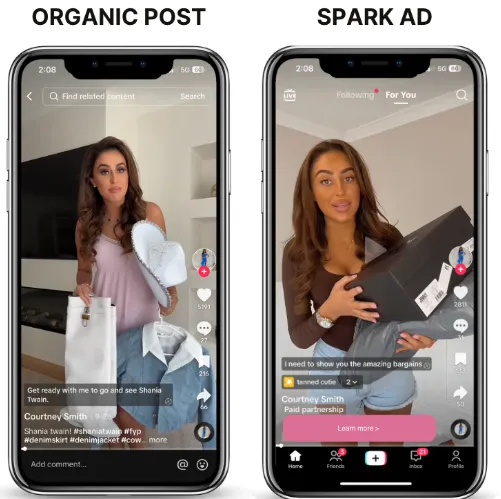
Spark ads let you turn existing organic content into paid ads, including posts from your own TikTok Business Account or authorized creator posts. This is one of the most important TikTok ad formats (as per TikTok itself) because it preserves social proof.
The ad can carry the original post’s likes, comments, shares, and creator identity, all of which increase credibility, unlike a standard dark ad.
Spark Ads are particularly useful when user-generated content (UGC) is already showing strong engagement. Instead of forcing every creative into a polished brand-owned format, you can simply amplify something that already feels native to the community.
We favor this format for DTC brands that want stronger conversion performance on TikTok. Brands use Spark Ads to scale creator demos, founder videos, customer reactions, product comparisons, and comments-as-hooks.
To make it work, you need creator permissions, clear usage rights, and a process for turning high-performing posts into ads quickly.
Best for: Creator-led UGC, social proof, scaling organic content, and influencer campaigns.
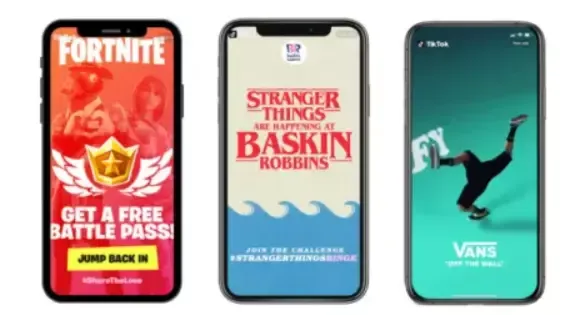
4. Branded Hashtag Challenges
A branded hashtag challenge invites users to create content around a campaign prompt, usually tied to a hashtag, song, product behavior, or cultural moment.
Instead of only asking users to watch, the format asks them to participate. This can make it useful when you want community engagement and user-generated content at scale.
This format is most useful when the challenge is simple enough for real people to copy. If the action is too complicated, too brand-heavy, or too disconnected from TikTok culture, participation drops.
The best branded hashtag challenges usually give users a repeatable behavior:
Show a transformation (before and after)
Try a product
Recreate a sound
Respond to a prompt
The goal is cultural reach. The risk is cost and creative unpredictability. You can buy the format, but you can’t force people to care. So, this format is better for brands with enough budget, cultural relevance, and a clear participation hook.
Best for: Awareness, participation, UGC, cultural moments, launches, and brands with a strong community angle.
5. Branded Effects
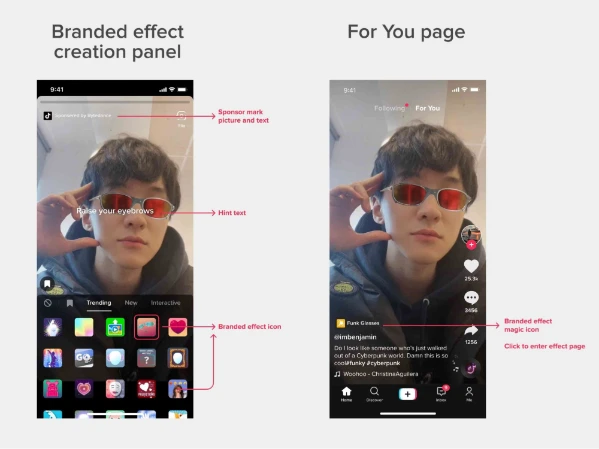
Branded effects let users interact with custom visual elements such as stickers, filters, lenses, or AR Filters. Instead of simply seeing a product claim, users can play with the brand inside their own content creation process.
This format is great for beauty, fashion, entertainment, gaming, food, and consumer products, where visual interaction helps the product feel more memorable.
For example, a cosmetics brand might use an AR try-on style effect, while an entertainment brand could create a character-based filter.
Like a branded hashtag, the goal is participation and engagement. Every user who creates with the effect can become a small distribution point for the campaign.
It can be tricky because you need a concept people actually want to use. A filter that only shows your logo is not enough. Plus, it’s not the most conversion-focused format, more like a mid-funnel contributor.
Best for: Interactive awareness, beauty and fashion trials, entertainment launches, community participation, and TikTok-first branding cues.
6. Playable Ads
Playable ads are interactive ads that let users try a feature, app experience, or game mechanic before taking the next action. Of course, this format is best for games and apps. It can help connect with high-intent users and let them preview the app experience before downloading.
Playable ads are less relevant for most e-commerce brands unless the product has a digital, quiz-based, or interactive buying experience. And they also require more production effort than standard video creative, so they work best when your app has enough budget and funnel data to justify the build.
Best for: Mobile games, apps, and interactive demos.
7. Shopping Ads
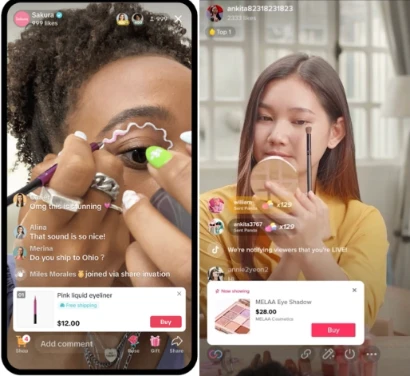
Shopping ads are built for TikTok commerce and are especially important for e-commerce brands using TikTok Shop. These formats help connect product discovery with shopping actions via product cards, catalog connections, creator content, and in-app buying paths.
This is where TikTok's shopping power becomes more important. After all, it’s the second biggest social shopping platform with over 71 million shoppers in the US as of 2025.
If your product is visually demonstrable, impulse-friendly, creator-friendly, or already getting comments like “where can I buy this?”, shopping ads can shorten the path from discovery to purchase.
But how well these ads perform also depends on other factors like product detail page, reviews, shipping expectations, creator content, and pricing.
Best for: TikTok Shop sellers, DTC brands, product discovery, catalog promotion, creator commerce, and direct-response ecommerce.
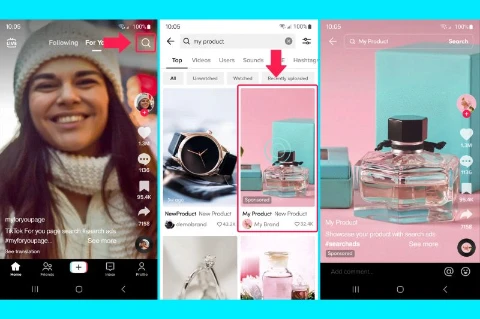
8. Search Ads
Search ads help brands appear when users actively search inside TikTok. This matters because TikTok has become a discovery and research platform for users looking for recommendations, tutorials, reviews, recipes, products, and local experiences inside the app.
For marketers used to Google, TikTok search ads are interesting because the intent is different. Google search typically captures demand from someone who already knows what they want. TikTok search can capture curiosity while the user is still comparing options, watching creators, reading comments, and looking for social proof.
But, again, the creative still needs to feel native. A search placement doesn’t mean you can use a static keyword ad mindset. Use creator demos, clear text overlays, direct answers, and a strong CTA. The more closely your video answers the searcher’s intent, the better the experience feels.
Best for: Demand capture, product research moments, tutorials, reviews, category searches, and supplementing Google-style intent campaigns.
TikTok Ad Strategy: What Works Best
Once you know the main TikTok ad formats, the next step is building a strategy around how people actually use the platform.
Here are the TikTok ad strategies we use when helping brands turn creative into profitable growth.
1. Take a TikTok-First Approach
A TikTok-first ad strategy starts with the feed experience. Your ad has to feel like something a real person would watch voluntarily before it can sell anything. This applies across TikTok ad formats, including in-feed ads, Spark Ads, shopping ads, and search ads.
Build your creative around:
Fast hooks in the first one to three seconds
Native editing, jump cuts, captions, green screens, and text overlays
Sound-on storytelling with music, voiceovers, or creator narration
Product proof shown visually, not only explained
A direct CTA that fits the video’s natural flow
According to the platform itself, ads specifically designed for TikTok had a 27% higher completion rate than repurposed ads.
This is a strong warning against simply exporting your Meta, YouTube, or Google creative into TikTok Ads Manager and expecting the same result.
Pro Tip: From our experience, the best workflow is to start with platform observation before production. Spend time reviewing competitor ads, creator videos, comments, saves, shares, and repeated questions.
2. Use Creator-Led UGC
It wouldn’t be wrong to say UGC is king when it comes to TikTok promotions. It’s the strongest pillar of creative strategy for in-feed, topview, and, of course, spark ads.
But here’s what many brands get wrong about influencer and UGC-led ads on TikTok: the creator doesn’t always need celebrity-level reach. In many categories, micro-creators can outperform larger influencers because they feel more specific, believable, and close to the community.
We’ve seen this first-hand. For BodyandFit, a health supplements brand, we saw great results with both organic content and ads that featured UGC from niche creators with decent followings.
TikTok’s 2026 trend guidance points in the same direction. Its TikTok Next 2026 report says people are coming to TikTok for more unfiltered stories and behind-the-scenes moments.
To ensure your UGC strikes the balance between authenticity and promotion, include the following in their brief:
The product claim or offer
The audience's pain point
One required proof point
Three possible hooks
One visual demo requirement
A natural CTA
Clear TikTok Policies and disclosure requirements
And remember, while briefs are important, don’t script everything. That won’t fly on TikTok.
3. Use Trends Strategically (Not Blindly)
Trends are a big thing on TikTok, just like other social media platforms. The only difference is that trends on TikTok can come and go fast. So, first, you have to be fast if you’re going to lean into a trend.
But trends don’t always work out great for ads. In fact, we’d argue that trend-chasing can even lead to budget waste. The mistake is assuming every hashtag, sound, meme, or editing style deserves a brand response.
A better rule is to use trends only when they connect to your product, customers, industry, or brand.
Also, the best trend-based ads usually don’t copy the trend exactly. In fact, they borrow the structure. For example, use a trending “POV” format to dramatize the customer problem or use a popular sound to set the pace.
And, of course, if you’re lucky, your branded hashtag challenge could just go viral.
4. Refresh Creatives Every Two Weeks
Ad fatigue is real on TikTok. Creatives don’t usually have the same shelf life as evergreen search ads or long-running Meta winners. The feed moves quickly, and the same ad can lose efficiency once the audience has seen it too many times.
TikTok’s own creative best practices advise advertisers to combat creative fatigue by keeping a consistent supply of creatives ready for refreshes. TikTok Ads' own AI and other generative AI tools can help churn out creative fast.
You should refresh ad group creatives when delivery results show a consistent decline or when daily new users are low.
For most performance teams, a two-week creative refresh rhythm is a practical operating system. It gives you enough time to collect data without waiting so long that performance decays.
A simple refresh plan could look like this:
Week 1: Launch five to eight creative variations
Week 2: Identify winning hooks, creators, and offers
Week 3: Produce five new variations based on the winners
Week 4: Retire fatigued ads and scale the best new versions
5. Captivate Attention with Hook-First Content
On TikTok, the hook is not decoration. It is the gatekeeper. If the first seconds fail, the rest of the ad may not matter.
Good hooks are specific, visual, and emotionally clear. Weak hooks sound like brand copy. Strong hooks sound like something your customer might say, ask, or stop scrolling to inspect.
Here are some examples of strong TikTok UGC hooks:
“I stopped buying expensive serum after testing this for 30 days.”
“Three things nobody tells you before switching to this coffee.”
“This is why your dog still pulls on walks.”
“I tried the viral version, then tested the cheaper one.”
“Here’s what happened after we used this for one week.”

TikTok’s 2025 research on creative effectiveness revealed that strong first impressions, early branding, and emotional impact help drive higher creative success. It also notes that brand lift, sentiment analysis, and multi-touch attribution can give a more accurate picture of TikTok creative performance than surface metrics alone.
This means you should judge hooks by more than views. Watch thumb-stop rate, two-second views, six-second views, video completion rate, click-through rate, cost-per-view, and cost per acquisition.
Our favorite insider test is to read the first line of the script without the video. If it could apply to any brand in the category, it is not sharp enough.
6. Use the Right Audio as a Conversion Lever
TikTok is a sound-on entertainment experience. In fact, 88% of users say sound is super important to their TikTok experience.
Audio should be treated as a conversion lever. The right sound can create pace, emotion, familiarity, and credibility before the user reads the caption or processes the offer.
According to TikTok, users are 15% more likely to skip an ad without sound, which makes a silent creative a risky default.
The strongest TikTok ad audio usually falls into one of four buckets:
Creator voiceover explaining the product in plain language
Trending or commercially approved music that matches the mood
Product sounds, such as pouring, clicking, applying, unboxing, or before-and-after reveals
Conversational audio that makes the video feel like a real recommendation
TikTok’s SMB Creative Playbook advises advertisers to use music to set mood and rhythm, explore the Commercial Music Library for tracks cleared for paid advertising, and use voiceover for how-to content, reviews, commentary, or narration.
4 Proven TikTok Ad Creative Frameworks
Besides strategic ad format choices, you also need the creative to be impactful. In fact, your creative can make or break the ad's performance and its ability to achieve the underlying goal.
Below, we have shared some of the creative frameworks we’ve tried in-house that have delivered tremendous results.
The goal is to give your creative team and creators enough structure to sell clearly while still sounding native to TikTok.
1. Problem → Agitate → Solution
The Problem → Agitate → Solution framework works because it starts where your customer already is: frustrated, confused, skeptical, or stuck. Instead of opening with your product, you open with the pain point.
For example, a DTC supplement brand might open with, “Still crashing at 3 p.m. even after your second coffee?” The ad can then agitate the pain with quick cuts of low energy, unfinished work, and sugar-heavy snacks before showing the product routine and a creator explaining why they switched.
A skincare brand could use the same structure around redness, dryness, or wasted money on complicated routines.
This framework is useful for in-feed ads because it gets to the point quickly while still creating emotional tension. It also pairs well with TikTok Spark Ads when the original creator's post already contains a strong complaint, transformation, or “I wish I knew this earlier” angle.
Best for: Pain-point products, problem-aware audiences, retargeting, direct-response offers, and brands with clear before-and-after value.
2. Before → After → Bridge
Before → After → Bridge is one of the cleanest frameworks for TikTok because it lets the viewer see a transformation quickly. You show the “before” state, make the “after” state desirable, then explain the bridge that gets the user there.
For example, a home organization brand might open with a messy drawer, cut to a clean drawer system, then show the product being installed in seconds.
This format works because TikTok users make quick judgments visually. TikTok’s creative best practices emphasize production basics such as vertical shooting, high-resolution footage, and safe-space-friendly layouts because these details help creative assets work harder in the feed.
For e-commerce, Before → After → Bridge is great when your product has a visible payoff. Beauty, fashion, home goods, food, pet products, cleaning products, fitness, and productivity tools can all use this framework. It also works well on TikTok Shop because product demonstrations can naturally lead to a purchase.
Best for: Visual products, e-commerce/TikTok Shop, transformation stories, product demos, and offer-led conversion ads.
3. Demo + Social Proof Hybrid
The Demo + Social Proof answers two questions at once: “What does this do?” and “Can I trust it?”
A simple structure looks like this:
Open with the result, claim, or customer reaction
Show the product being used in a real setting
Add social proof through reviews, comments, ratings, creator experience, or press mentions (that could also be achieved through a Spark Ad)
Address one likely objection (playing the devil’s advocate)
Close with a specific CTA
For example, a kitchen gadget ad could open with a creator saying, “I thought this was another useless kitchen tool, but I’ve used it every morning for two weeks.” Then the video shows the product in action, cuts to on-screen review snippets, and ends with a TikTok Shop product card or landing-page CTA.
This framework is effective because TikTok is not only a viewing platform but also a discovery and validation environment. Users watch the video, check the comments, assess the creator's credibility, and look for signals that others have tried the product.
This approach also aligns with how many DTC brands scale with micro-creators. You can ask five creators to demonstrate the same product while varying the proof point. Inside TikTok Ads Manager, you can see what works best.
But beware, your proof shouldn’t come off as performative.
Best for: Skeptical buyers, competitive categories, DTC brands, product launches, TikTok Spark Ads, and conversion-focused paid ads.
4. “POV” & Story-Based Hooks
“POV” and story-based hooks make the ad feel like content first. Instead of saying “buy our product,” the video drops the viewer into a relatable moment.
For example:
“POV: You finally found jeans that fit your waist and hips.”
“POV: Your dog destroys every toy except this one.”
TikTok has said trends can act as storytelling templates for the community. Its creative guidance also cites research showing that 77% of users say they like it when brands use trends, memes, or challenges on TikTok to create new content.
Story-based hooks are useful because they can sell without feeling like a pitch. A creator can narrate a personal routine, show a mistake, react to a misconception, or document a small transformation.
This works well for Gen Z and younger millennial audiences who are quick to reject overly polished advertising.
Best for: Creator-led UGC, Organic content amplification, TikTok Marketing, community-driven brands, and products that benefit from personal context.
TikTok Ads Optimization & Scaling Strategy
Now, to really get your TikTok ads to the next level and deliver on performance, optimization is necessary. This is what we recommend:
Testing structure (creative volume, ad groups): Keep it simple. 3-5 different creatives per ad group and 3-5 diversified ad groups per campaign give the system more delivery and optimization options during exploration.
Budget allocation: TikTok’s budget guidance recommends leaving the campaign budget open at first, using daily budgets at the ad group level, and setting budgets based on the optimization event. For conversion campaigns, TikTok recommends a minimum budget of 50x current CPA/CPR or $100, whichever applies to your setup.
Scaling (horizontal vs vertical): Use horizontal scaling (new creatives, creators, or offers) when you want more learning. Use vertical scaling (spend increase) when you already have a clear winner.
Retargeting basics: Retargeting on TikTok should be simple and behavior-based. TikTok Custom Audiences can be used to retarget leads or past engagers, exclude recent customers, and create lookalike audiences for prospecting.
Build High-Performing TikTok Ads with Creative Milkshake
TikTok can be a powerful channel for product discovery, creator-led demand, and direct-response growth. But traction does not come from picking a format and hoping the creative works.
You need the right ad format, a strong creative framework, fresh testing cycles, creator input, and clear performance analysis.
This is how we approach TikTok ads at Creative Milkshake. We help you produce TikTok ads that match the platform, connect with audiences, and scale through continuous creative testing.
If you want TikTok ads that do more than fill the feed, get in touch with Creative Milkshake.
You can also check out our portfolio to see how we turn creator-led creative into ads built for performance.
FAQs
What is the best strategy for TikTok ads?
The best strategy for TikTok ads is creating short-form vertical videos that match native TikTok content. Good TikTok ads use strong hooks within the first 3 seconds, creator-style storytelling, trending audio, and clear CTAs. Also, refresh creatives every couple of weeks.
Which TikTok Ad format is the best?
The best TikTok ad format depends on your goals and budget. But according to TikTok itself, Spark Ads perform well because they boost existing organic posts while preserving social proof. Premium formats such as TopView or brand takeover deliver higher reach but require larger budgets.
What are the best practices for TikTok Ads?
The best practices for TikTok Ads include using the vertical 9:16 video format, capturing attention within 3 seconds, adding captions, and featuring real people rather than polished commercials. High-performing TikTok ads maintain video lengths between 15 and 30 seconds and include clear calls to action.
Are premium TikTok ad formats worth it?
Premium TikTok ad formats can be worth it for brands focused on mass awareness, product launches, or large-scale reach. Formats such as TopView and Branded Hashtag Challenges generate millions of impressions within 24 hours.
How much do TikTok ads cost?
TikTok ads typically cost between $0.17-$1.00 per click and $3-$10 per 1,000 impressions, depending on targeting, competition, and ad quality. TikTok campaigns usually require a minimum daily budget of $20 at the ad group level and $50 at the campaign level. Premium ad formats like brand takeovers in some markets can cost more than $50,000 per day.
Can Creative Milkshake produce TikTok Ad creatives?
Yes. Our team at Creative Milkshake can handle TikTok ad creative strategy, creator sourcing, production, editing, testing, and paid media buying. We help you move from concept to finished ad assets, then use performance data to guide the next round of creative.
What kind of TikTok creators does Creative Milkshake provide?
At Creative Milkshake, we help brands connect with niche microinfluencers with audiences that match the brand’s persona. We work closely with creators to ensure UGC and influencer assets represent the brand authentically and are fit for TikTok consumption.