UGC is everywhere, but scaling it profitably can be difficult.
That’s because user-generated content is no longer in the influencer bucket; it’s more of a performance system.
Without structured A/B testing, increasing creative output gives you more assets, but no reliable insights into what actually drives conversions.
And there are plenty of agencies that can handle content production. But very few connect iteration cycles to performance data and paid media workflows. That gap shows up when CPA rises or spend expands across markets.
So this guide separates creator marketplaces, performance-driven UGC systems, and hybrid production models. Here, you’ll review leading UGC ad agencies in Europe and see which structure actually fits your current growth stage.
P.S. If you need structured UGC testing tied directly to paid media, contact Creative Milkshake today. Let’s build a system that supports your next stage of scale.
Quick Comparison Overview
When you evaluate UGC partners, structure matters more than style. The model you choose affects how testing connects to paid media and how well performance scales.
So here is a simple side-by-side view to help you assess operational fit fast:
Why UGC Ads Dominate Paid Social in Europe
UGC ads dominate paid social in Europe because they convert attention into action faster than polished brand ads. European buyers respond to peer-style content that looks native on social channels.
In fact, 74% of European customers say they find UGC more trustworthy than branded content. That directly affects click-through rates and conversion under increasing ad spend.
This creates several performance advantages:
Platform-native formats: UGC mirrors the content people already engage with in their feeds.
Faster creative refresh cycles: New variations can launch weekly without rebuilding full productions.
Lower production overhead: Creators can generate usable assets quickly without complex shoots.
But remember that raw volume does not scale on its own. Without structured testing tied to paid media data, content turns into random sourcing instead of controlled iteration.
For example, Creative Milkshake reworked TikTok UGC for Wise and ran structured testing cycles. CPA dropped by 26.23%, while conversion rates increased by 43.75% in the U.S. and doubled in the EU.
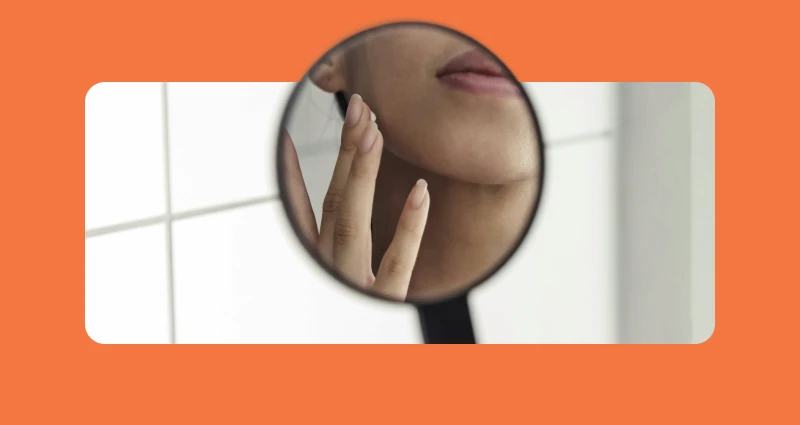
Here's an example of a UGC ad from that campaign:
How We Selected These UGC Ad Agencies
We know you’re looking for execution partners, so we filtered the agencies listed based on operational depth rather than creative style.
Here are the criteria we used to assess them:
Performance-first orientation (not influencer marketing only): You need agencies that treat UGC as part of your ad strategy and not as a standalone creator activity. That means linking assets directly to CPA and scaling goals.
Structured testing systems: Creative must move through defined validation stages. Without repeatable testing cycles tied to paid media data, iteration becomes random content production.
Paid social integration: Execution must connect with ongoing advertising campaigns. If creative and media operate separately, learning slows and spend efficiency drops.
Platform-native expertise: Ads must reflect how Meta, TikTok, and YouTube distribute content across social media feeds. From our daily experience, we know that platform mechanics shape results.
Creative iteration velocity: You need a predictable content delivery volume that supports weekly refresh cycles without rebuilding full productions.
Localization capability: Expansion across markets requires adapted messaging and coordinated campaign execution.
Ability to scale spend without breaking efficiency: Creative volume must hold performance under increasing budget pressure.
Case study proof: Reported wins must reflect repeatable systems rather than one-off spikes tied to creative luck or temporary platform signals. Results should connect directly to testing cadence, media integration, and budget control.
For example, Creative Milkshake helped RéVive Skincare restructure UGC testing cycles, which resulted in a 43% reduction in CAC and a 25% increase in ROAS. That shift came from controlled iteration.
Pro tip: If performance drops after scaling spend, fatigue is likely the cause. Read our breakdown on how to outproduce creative fatigue on Meta before you push the budget further.
Now, let's go over the agencies that can help you achieve results like these.
Top 10 UGC Ad Agencies That You Should Work with in Europe
We understand that you need partners who treat UGC as infrastructure for performance-driven marketing. So here are the agencies that align content creation, ad optimization, and paid execution with measurable growth. These are the structures that support real campaign scale.
1. Creative Milkshake - Best for scalable UGC creative systems for paid social
Website: Creativemilkshake.com.
Location: Netherlands.
Industry focus: E-commerce, Health & Wellness, Finance, SaaS & B2B, Fashion, Beauty, Food & Drink, Baby & Kids, Consumer Goods, Home & Pet, Apps & Services
Noteworthy clients: Ubisoft, Amazon, Wise, Body&Fit, N26, Spoke London, iwoca, RéVive Skincare
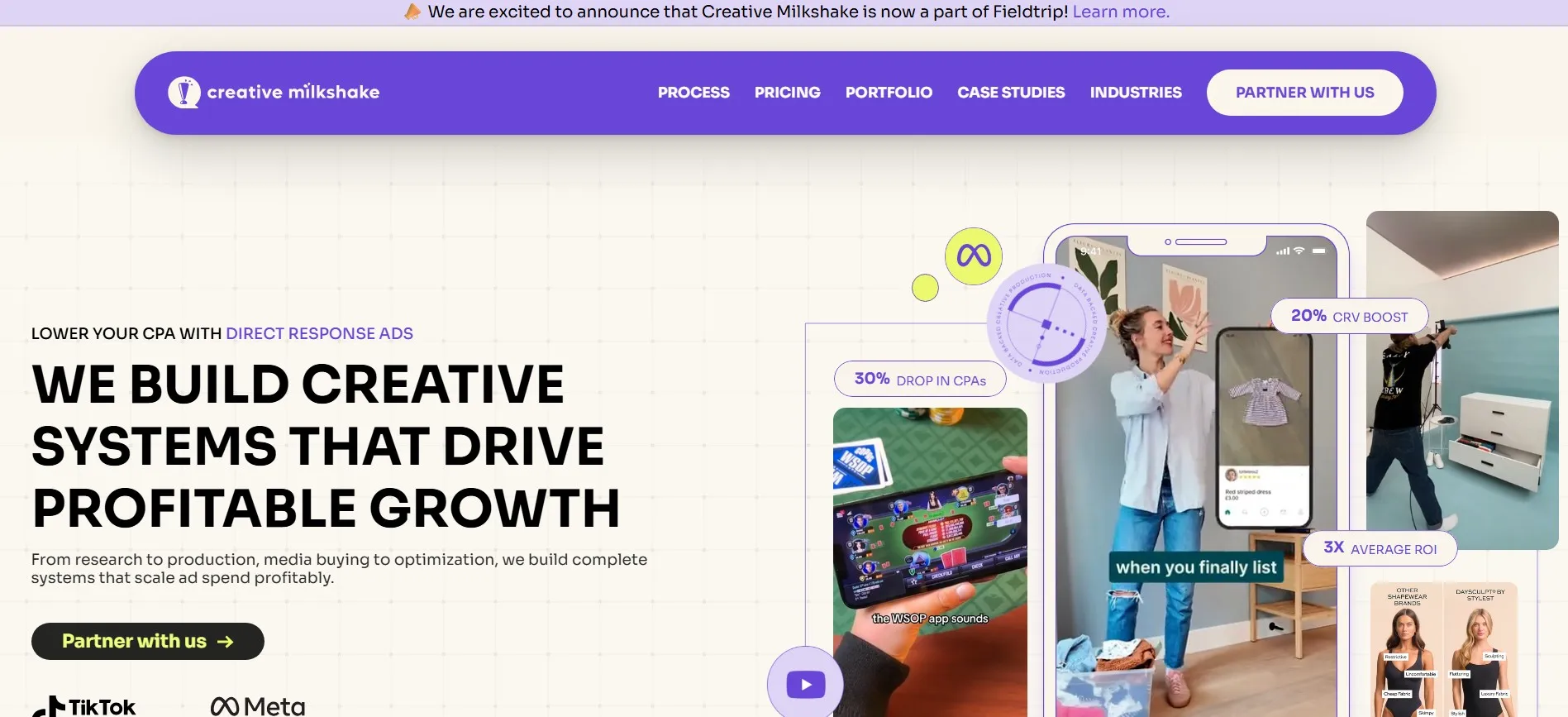
Creative Milkshake works as a performance creative studio built for paid scale. Our structured system connects research, scripting, production, and media feedback. Studio assets and creator-led formats run side by side, so feed-native ads and brand-controlled visuals support the same growth goal.
Campaigns run across Meta, TikTok, and YouTube. Our team operates globally, and we run multilingual campaigns in English, Spanish, German, French, Italian, Dutch, and Portuguese. So, if you’re scaling across European markets, we’re the partner for you.
In our work with N26, we created diversified UGC-style ads on Meta that reduced mobile registration CPA by 65%. We tested a mix of creative angles, then scaled the top performers based on real-time performance signals.
Core services:
Paid social creative strategy across Meta, TikTok, and YouTube.
Hybrid studio and creator-led ad production.
AI-assisted research and scripting workflows.
Continuous ad creative testing cycles.
Paid media management integration.
Multilingual European campaign rollout.
Why choose Creative Milkshake: You'll work with a team that produces 2,000+ ads per month without losing control over audience fit or market nuance. With experience across 500+ brands and average results like 3x ROI and major CPA reductions, you get a setup built for performance-led paid social growth.
2. Push Group - Best for AI-supported UGC performance marketing

Website: Pushgroup.co.uk.
Location: United Kingdom.
Industry focus: Financial services, E-commerce and retail, Outdoor and apparel, Lead generation verticals
Noteworthy clients: Dr Chrissie Yu, The Education Group, Clarks, Hilti, Mo Bros, Slipfree, Cash 4 Gold-Now
Push Group is an 18-year digital marketing agency built around performance and AI acceleration. They bring together human strategists with proprietary AI tools to optimise search and paid social together, rather than in silos.
For Cash 4 Gold Now, they replaced polished ads with creator-style formats on Meta and Snapchat. Cost per lead dropped from £45 to £24, a 46% reduction. At the same time, total spend fell by 41%, CTR increased by 33%, and conversion rate improved by 66%.
Core services:
Paid search and paid social management.
UGC-style performance creative production.
Conversion rate optimisation.
SEO and demand capture.
AI-focused consultancy.
Why choose Push Group: You get media buying and creative testing running under one performance structure, where UGC formats feed directly into measurable growth experiments.
3. UGCers - Best for fast-turnaround UGC production for paid ads

Website: Ugcers.com.
Location: United Kingdom (London and Leeds, serving Europe and the US).
Industry focus: Beauty and haircare, Food and snacks, Party and occasion retail, DTC and ecommerce brands
Noteworthy clients: Tangle Teezer, Wolt, Crispr Bites, The Hen Planner, Glassguard
UGCers works more like a creator sourcing platform than a full performance agency. Instead of running acquisition systems, the team connects brands with a vetted pool of non-influencer creators and manages the entire production process from brief to final assets.
The workflow is intentionally simple and fast. Brands submit a brief, UGCers matches the right creators, and the finished content is delivered within 7–10 working days. It’s a practical setup for teams that already run paid social internally but need a steady flow of new creative.
Core services:
Fully managed UGC video production.
Product and lifestyle imagery.
Scriptwriting and creator briefing.
End-to-end creator coordination.
Managed UGC programmes and reporting.
Why choose UGCers: You get a streamlined production workflow with fast turnaround and managed creator sourcing, making it a strong fit for brands that need high content volume while running media buying in-house.
4. Kontent Kolektiv - Best for creator-led UGC campaigns in Southeast Europe

Website: Kontentkolektiv.com.
Location: Southeast Europe.
Industry focus: Beauty and skincare, Spirits and beverages, Retail and consumer brands
Noteworthy clients: Pepco, NAOS (Bioderma), Pernod Ricard, Silver Court, Beefeater London, Teo, Vivacom, Savex
Kontent Kolektiv is a UGC-focused production house built around short-form, creator-led video. They focus on TikTok, Instagram Reels, YouTube Shorts, and Meta placements, with a strong regional footprint across Southeast Europe.
Their team has worked on campaigns for global brands and has built a curated network of 100+ regional creators. Their approach centers trend-aware formats and feed-native storytelling rather than studio-heavy brand ads.
Core services:
UGC strategy and concept development for short-form platforms.
Creator sourcing and regional casting.
Script and brief creation aligned to each market.
End-to-end video production and editing.
Platform-specific formatting and optimisation.
Why choose Kontent Kolektiv: You get strong creator coverage across Balkan markets, with a model built for brands expanding through TikTok-first strategies and culturally localized short-form content.
5. Neads - Best for large-scale creator-sourced UGC production
Website: Neads.co.
Location: France.
Industry focus: Fashion, Cosmetics and beauty, Tourism, Lifestyle, and consumer brands
Noteworthy clients: Kiabi, Eleven Paris, Kaporal Jeans, Nivea, Jules, Amazon, Gifi, Dijo
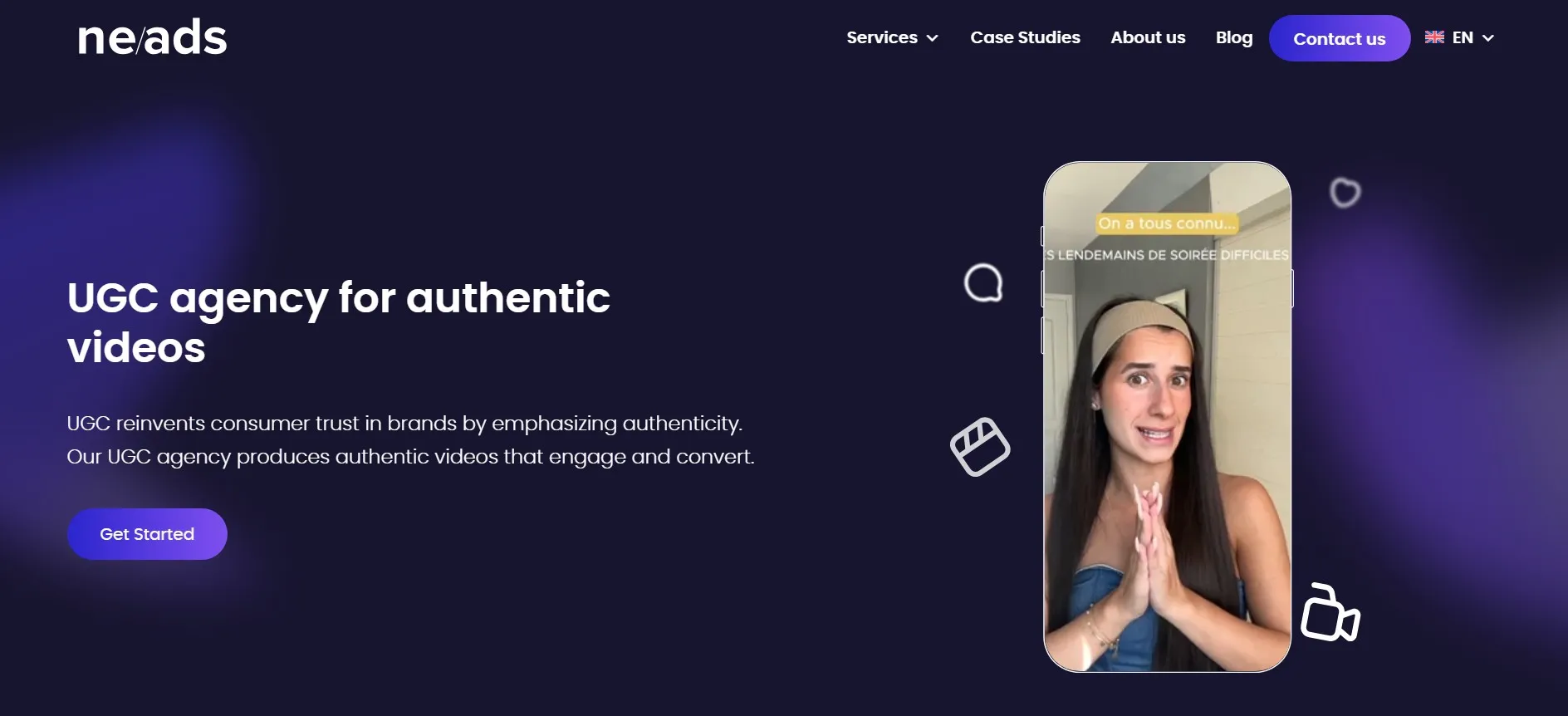
Neads connects brands with a network of 500+ specialised creators. Creative strategists develop briefs, match brands with creators by vertical, and oversee short-form production for TikTok, Meta, and Snapchat.
When they worked with Kiabi, they mixed motion design ads with creator clips to modernise paid social output and align formats more closely with feed behavior. The campaign focused on channel-specific creative that focused on brand control and native-style UGC elements.
Core services:
UGC concept and short-form strategy.
Creator sourcing across a 500+ network.
Scriptwriting and briefing.
End-to-end video editing.
Performance analytics for paid campaigns.
Why choose Neads: You can test UGC at scale without building internal creator operations, using a marketplace of creators to produce influencer-style formats before committing to a full testing system.
6. Skeepers - Best for UGC and reviews management for ecommerce brands

Website: Skeepers.io.
Location: France.
Industry focus: Omnichannel retail, E-commerce, Consumer brands, CPG
Noteworthy clients: L’Oréal, Groupe SEB, Ôrəbella, Redken, NARS Cosmetics, Kusmi Tea, BlendJet, Kicks
Skeepers operates as a UGC, reviews, and influencer marketing SaaS platform rather than a classic creative studio. They offer software and services to help brands collect, manage, and distribute ratings, reviews, videos, and live shopping content across e-commerce sites and retail partners.
In one launch campaign for Ôrəbella, 651 pieces of creator content generated 11.8 million impressions and a 6.26% engagement rate, alongside $522K in earned media value. The outcome demonstrated scale in visibility and social proof rather than structured paid acquisition testing.
Core services:
Ratings and reviews collection and syndication.
UGC video and photo management.
Influencer and creator campaign tools.
Shoppable UGC widgets.
Live shopping integrations.
Why choose Skeepers: You get one platform that centralizes reviews, social proof, and customer content, making it a strong fit for ecommerce brands focused on improving on-site conversion.
7. Be My Creator - Best for fast UGC production for DTC ad testing
Website: Bemycreator.com.
Location: United Kingdom and Europe.
Industry focus: E-commerce, Shopify and Amazon brands, DTC consumer products, TikTok-first brands
Noteworthy clients: Mistol, Carly, sisley Paris, sinvello!, Mavala Switzerland
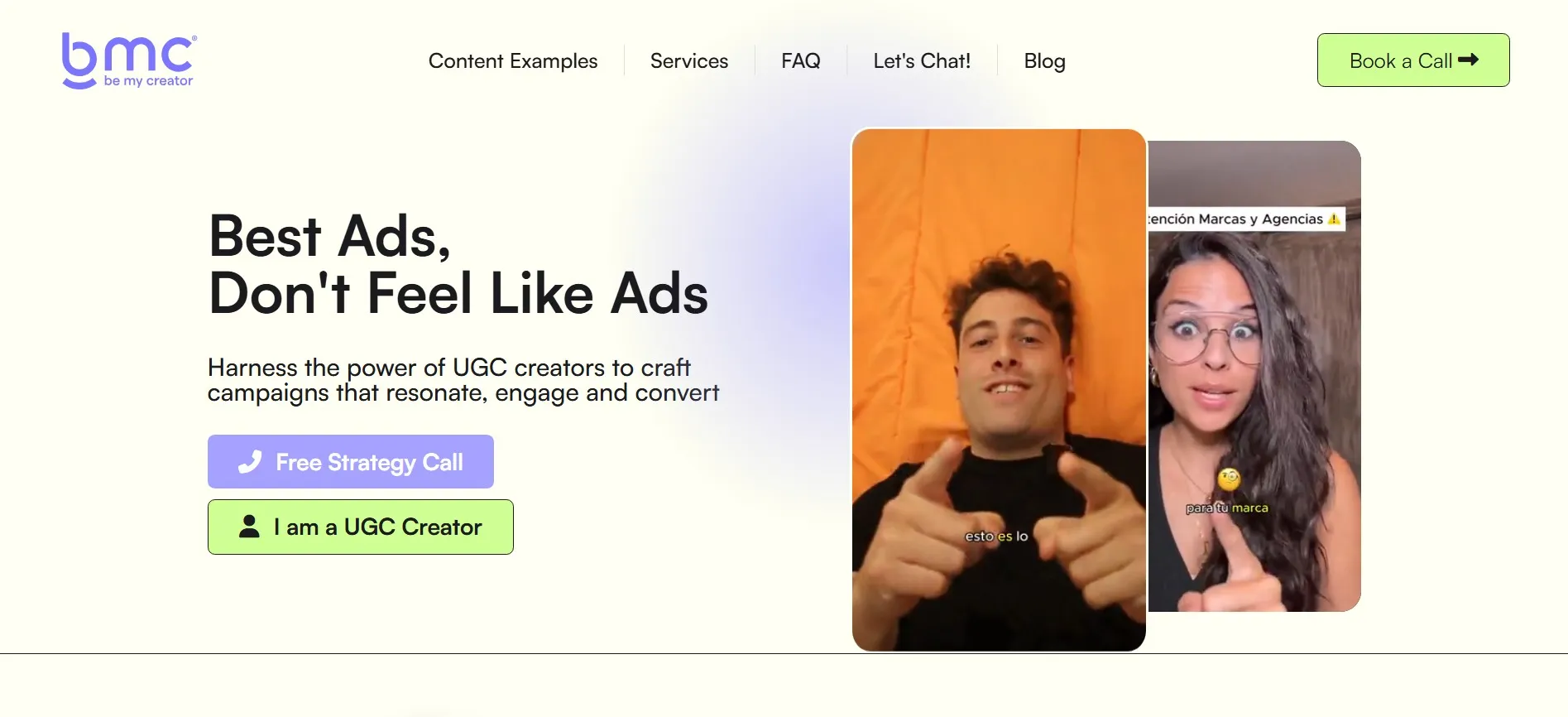
Be My Creator is focused on ad-ready UGC for TikTok and Meta. The model connects brands with British, European, and US creators, then manages concepting, sourcing, filming, and editing.
Here, the emphasis is on storytelling aligned with brand values rather than full media integration. Campaigns are structured to supply content quickly for DTC testing cycles, particularly for Shopify and Amazon-driven brands.
Core services:
UGC video production for TikTok and Meta.
Creator sourcing across the UK, US, and Europe.
Concept and script development.
UGC for Shopify and Amazon product pages.
Custom content packs by budget.
Why choose Be My Creator: You get a marketplace-driven creator workflow that simplifies coordination and speeds up asset delivery, making it a practical fit for DTC brands testing UGC ads before investing in a larger performance system.
8. Flowbox - Best for shoppable UGC content for ecommerce conversion

Website: Getflowbox.com.
Location: Sweden, The Netherlands, Spain, Denmark.
Industry focus: E-commerce and retail, Furniture and home decor, Fashion and lifestyle, Product-led consumer brands
Noteworthy clients: Rowico Home, Porcelanosa, Fatboy, XXL Nutrition, Ghost Bikes
Flowbox is a SaaS UGC platform that aggregates customer photos and videos from social platforms, manages rights, and embeds shoppable galleries across ecommerce sites. The main focus is on conversion and average order value rather than paid ad testing cycles.
In one example, Rowico Home integrated customer content across product pages and emails. After activation, average order size increased by 52%, and average order value rose by 67%. The uplift came from placing real customer visuals throughout the buying journey, which influenced purchase behaviour on-site.
Core services:
UGC aggregation and moderation.
Rights management and compliance.
Shoppable UGC galleries.
E-commerce platform integrations.
Performance analytics for on-site impact.
Why choose Flowbox: You get a platform designed to build structured on-site UGC ecosystems, making it a strong fit for retailers focused on improving e-commerce conversion.
9. Twirl - Best for scalable on-demand creator UGC production

Website: Usetwirl.com
Location: United Kingdom
Industry focus: E-commerce, Beauty, Fashion, Pets, Fitness, Food, and consumer brands
Noteworthy clients: Gumtree, Beauty Pie, treatwell, Voodoo, MARRO, Papa John's, Typeform
Twirl connects brands and agencies to a network of 6,000+ vetted creators and delivers short-form content for ads, websites, and email. Brands submit briefs, select creators, review concepts, and receive edited assets through Twirl’s internal system.
This setup focuses on social-first storytelling and feed-native formats rather than full paid media integration. Testing and media optimisation typically remain with the brand or external partners.
Core services:
On-demand UGC video production.
Creator selection and briefing tools.
Short-form content for ads and landing pages.
Subscription-style content plans.
Asset delivery with commercial usage rights.
Why choose Twirl: You get structured creator coordination that supports consistent content production at scale, making it a strong fit for teams that want a steady flow of UGC while keeping control over their paid testing strategy.
10. The UGC Agency - Best for direct-response UGC ads for paid social
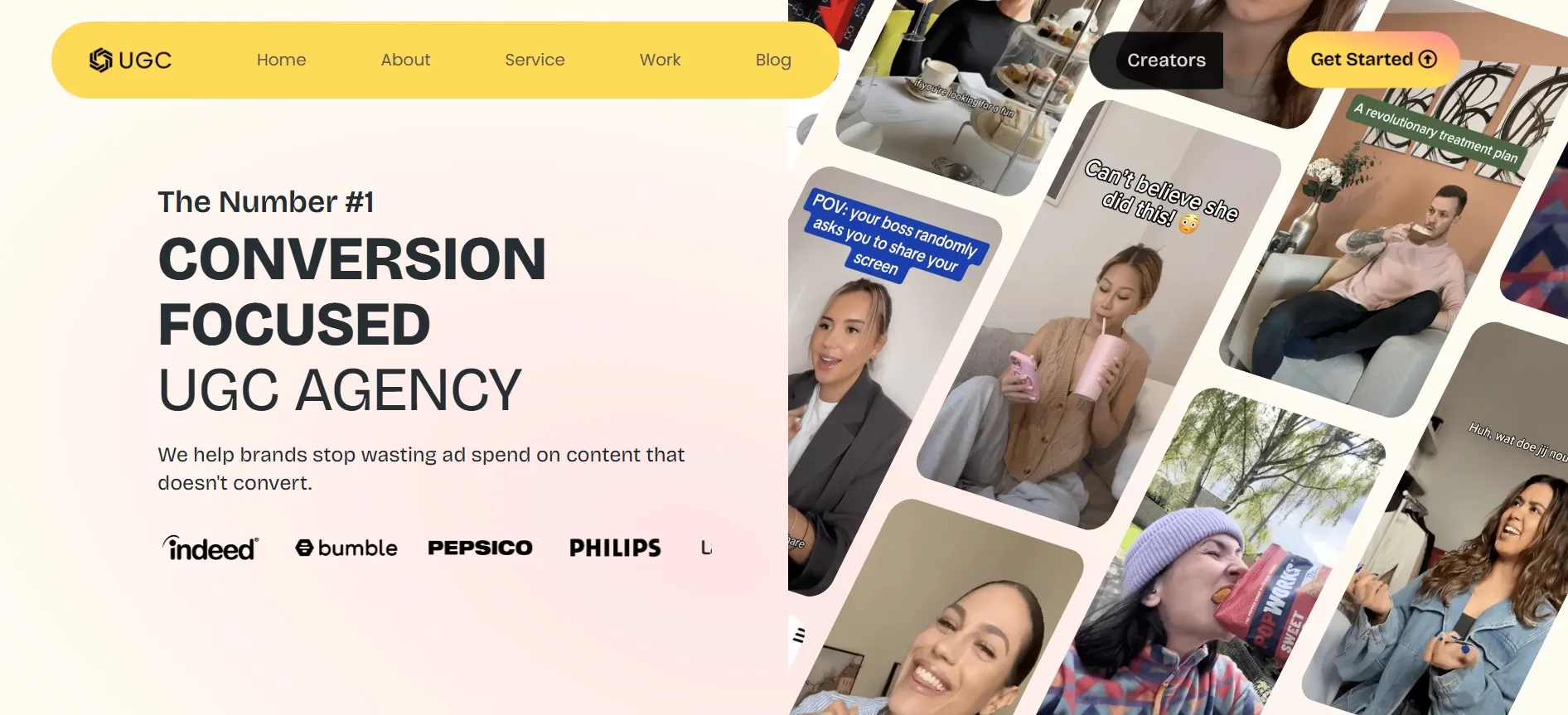
Website: Theugc.agency.
Location: United Kingdom.
Industry focus: B2C and DTC brands, Recruitment, Fintech and crypto, E-commerce
Noteworthy clients: Indeed Jobs, Glassnode, Accounting, Pepsico, Phillips, Badoo, VaynerMedia
The UGC Agency focuses on building paid ad funnels using short-form creator videos structured for direct response. Strategy, scripting, sourcing, and editing are handled in-house, with an emphasis on paid formats across Meta and Google.
In a campaign for Indeed Jobs, creators were sourced and scripted quickly, and multiple video variations were launched across paid channels within weeks. The approach supported rapid deployment and allowed creative testing at scale without waiting on traditional production cycles.
Core services:
End-to-end UGC campaign strategy.
Creator sourcing and management.
Scriptwriting and video editing.
Paid performance support across Meta and Google.
Tracking and reporting on UGC outcomes.
Why choose The UGC Agency: You get creative production designed to support paid acquisition systems, making it a strong fit for mid-sized DTC brands running performance-driven campaigns.
Pro tip: If your UGC isn’t scaling the way it should, the issue is typically testing structure. Before switching agencies, read our guide on why most brands get creative testing wrong and see what might be breaking performance behind the scenes.
How to Choose the Right UGC Ad Agency in Europe
Choosing an agency is less about creativity and more about operational fit. The right structure supports your growth stage, media priorities, and internal capacity.
Here are the three filters that help you decide.
Step 1: Define Your Growth Stage
First, clarify where you are. The creative system you need depends on your stage.
Pre-product market fit: Focus on fast, low-cost creative to test messaging and angles.
Scaling paid social: You need structured testing so winning concepts can be identified and scaled.
Multi-market expansion: Creative must be localized while keeping brand messaging consistent.
Conversion impact also matters here.
UGC can raise online conversions by up to 102%, which means structured testing can directly change revenue outcomes. But that lift only happens when content optimization connects with media data and not when assets are produced in isolation.
Step 2: Clarify Platform Priority
Next, decide where scale actually happens.
TikTok currently averages 3.70% engagement, which is significantly higher than older social platforms. That engagement favors native, short-form execution built for feed behavior and algorithm-friendly viral hooks.
Meta scaling requires predictable creative refresh cycles tied to campaign learning. And YouTube Shorts demands tighter scripting and clearer value signals.
Each platform shifts how authentic videos are structured and deployed inside ongoing media campaigns.
Step 3: Decide on a Model
Finally, choose the model that fits your constraints.
A marketplace gives you fast creator access but limited control over testing. A performance system integrates creative with paid media workflows, while a SaaS platform focuses on asset management rather than campaign impact.
The right decision depends on whether you need production volume, strategic integration, or both.
Red Flags When Hiring a UGC Agency
Not every agency that offers UGC can support a paid scale. So before you commit budget, watch for structural gaps.
Here are the signals that usually create performance risk:
No structured testing framework
If concepts go live without defined validation stages, learning resets each time results dip. That slows decision-making and increases CAC volatility.
No performance metrics
If reporting focuses on views or community engagement instead of cost per acquisition or conversion impact, creative output stays disconnected from revenue.
No platform-native understanding
If assets are reused across placements without adapting format or hook structure, campaigns lose feed alignment and waste spend.
Only influencer-style content
If the focus stays on content creators and lifestyle shoots without clear response triggers, your content strategy turns into exposure rather than acquisition.
No clear iteration process
If underperforming ads are not replaced on a defined schedule, content production becomes reactive. That breaks momentum and limits predictable scale.
Choose the Structure That Protects Your Scale
Scaling UGC in Europe means choosing the right operating model and not just the right creator pool. Marketplace models give you speed. SaaS platforms centralise reviews and on-site content. But performance systems connect testing cycles directly to paid media, which protects CPA as budgets grow.
So your decision comes down to structure.
If you want structured testing tied to live media data and controlled iteration under scale, start a conversation with Creative Milkshake and build a system that supports your next growth stage.
FAQ
What does a UGC agency do?
A UGC agency connects brands with creators who produce authentic, short-form content designed for paid ads and social feeds. They typically manage creator sourcing, briefs, production, and asset delivery so brands can test multiple ad variations quickly.
What is UGC advertising?
UGC advertising uses content created by real users or creators in paid campaigns. Instead of polished brand ads, it relies on authentic formats like product demos, testimonials, and lifestyle clips that feel native to platforms like TikTok or Instagram.
What’s the difference between UGC and influencer marketing?
UGC focuses on producing content that brands can use in paid ads, often without the creator posting it on their own profile. Influencer marketing, on the other hand, relies on creators promoting products to their personal audience.
What are some examples of UGC?
Common examples include product reviews, unboxing videos, tutorials, before-and-after clips, and casual “day-in-the-life” style content featuring a product.